
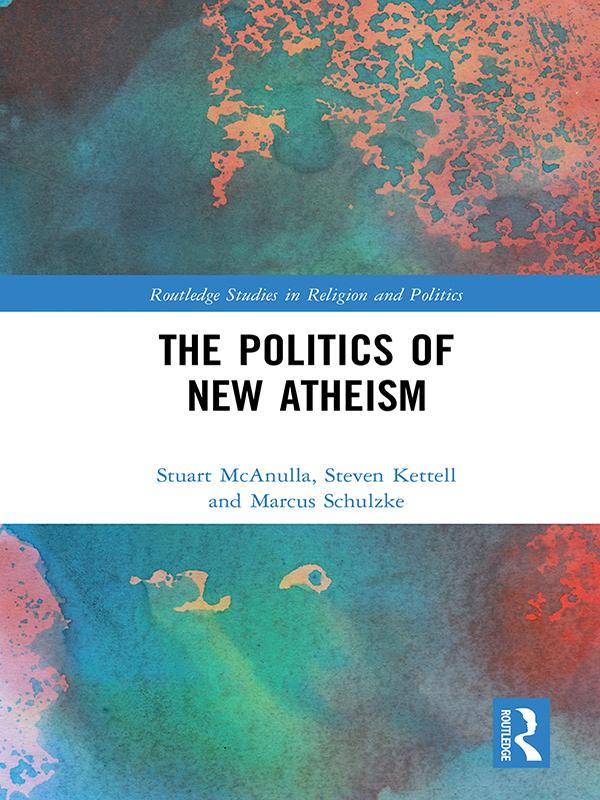
New atheism is best known as a literary and media phenomenon which has resulted in the widespread discussion of the anti-religious arguments of authors such as Richard Dawkins, Sam Harris and Christopher Hitchens, yet it also has strongly political dimensions. This book analyses the political aspects of new atheism and offers an analysis that is informed by insights from political science and political theory.
The authors locate new atheism within a diverse history of politically-oriented atheisms. It is argued the new atheist movement itself contains a considerable variety of political viewpoints, despite coalescing around forms of secularist campaigning and identity politics. New atheist views on monotheism, public life, morality and religious violence are examined to highlight both limitations and strengths in such perspectives. Conservative, feminist and Marxist responses to new atheism are also evaluated within this critical analysis.
The book rejects claims that new atheism is itself a form of fundamentalism and argues that the issues it grapples with often reflect wider dilemmas in liberal-left thought which have ongoing relevance in the era of Trump and Brexit. It will be of great interest to researchers and scholars in the fields of new atheism, political atheism, secularism, non-religion, and secular-religious tensions.
Payez facilement par carte, Klarna, Apple Pay ou Google Pay. Pas satisfait ? Vous avez toujours une garantie de remboursement de 14 jours. En savoir plus dans nos conditions. Si vous avez des questions, envoyez-nous un e-mail à hello@memmo.org.
Memmo facilite tes études, où que tu sois dans le monde. On rassemble tes manuels de cours et des outils d'étude intelligents au même endroit : résumés, quiz, podcasts et flashcards. Et il y a Ted, ton compagnon d'étude qui répond à toutes tes questions. Plus de 50 000 étudiants étudient déjà ici – conçu pour t'aider à apprendre plus vite et à moins stresser.