
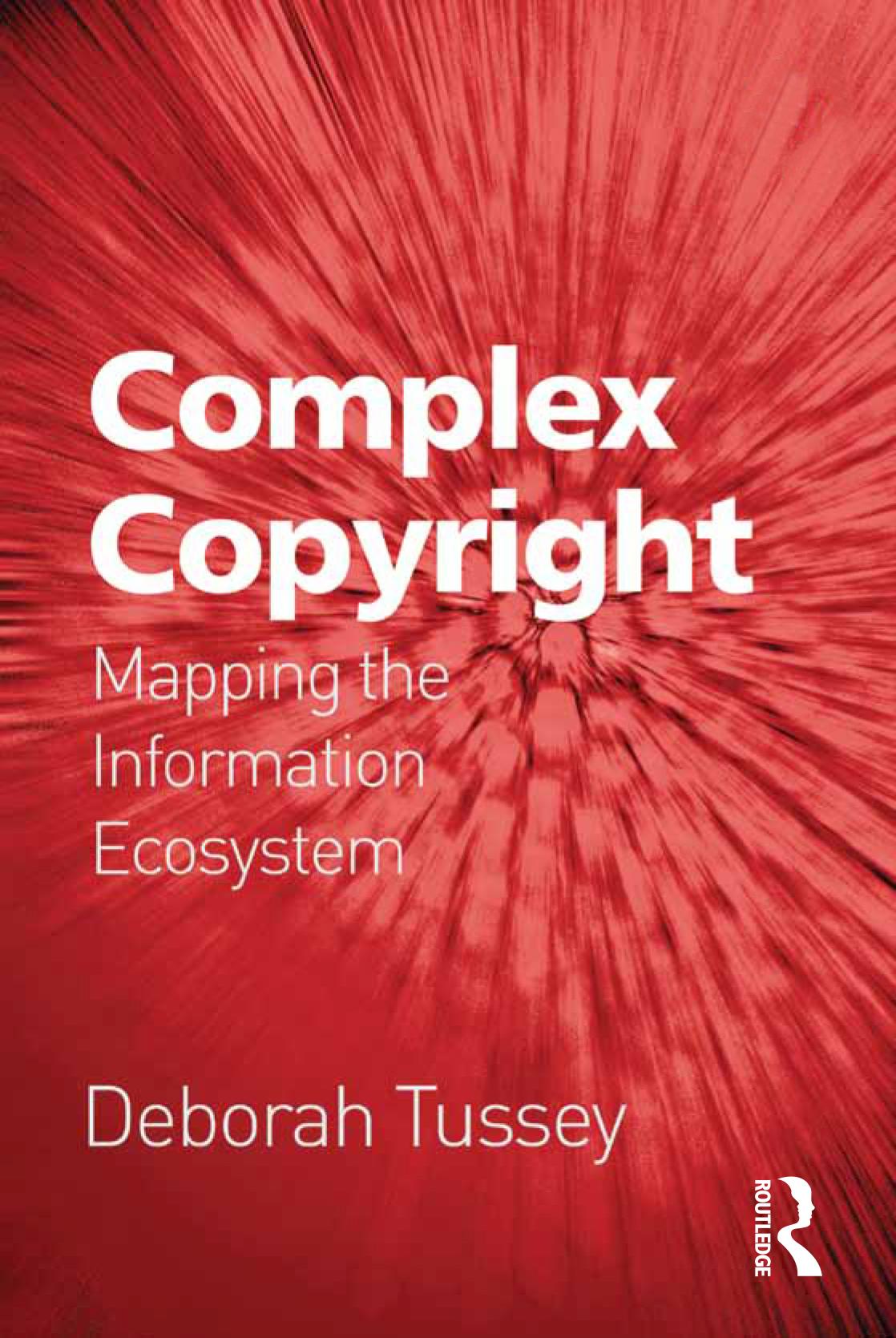
This book draws on a wide selection of interdisciplinary literature discussing complex adaptive systems - including scholarship from economics, political science, evolutionary biology, cognitive science, and religion - to apply general complexity tenets to the institutions, conceptual framework, and theoretical justifications of the copyright system, both in the United States and internationally. The author argues that copyrighted works are the products of complex creative systems and, consequently, designers of copyright regimes for the global 'information ecosystem' should look to complexity theory for guidance. Urging legal scholars to undertake empirical studies of real-world copyright systems, Tussey reveals how the selection of workable configurations for the copyright regime is larger than that encompassed by the traditional, entirely theoretical, debate between private property rights and the commons. Finally, this unique study articulates how copyright law must tolerate certain chaotic elements that may be essential to the sustainability of complex systems.
Payez facilement par carte, Klarna, Apple Pay ou Google Pay. Pas satisfait ? Vous avez toujours une garantie de remboursement de 14 jours. En savoir plus dans nos conditions. Si vous avez des questions, envoyez-nous un e-mail à hello@memmo.org.
Memmo facilite tes études, où que tu sois dans le monde. On rassemble tes manuels de cours et des outils d'étude intelligents au même endroit : résumés, quiz, podcasts et flashcards. Et il y a Ted, ton compagnon d'étude qui répond à toutes tes questions. Plus de 50 000 étudiants étudient déjà ici – conçu pour t'aider à apprendre plus vite et à moins stresser.
Tu pourrais aussi aimer
Acheter le livre0