
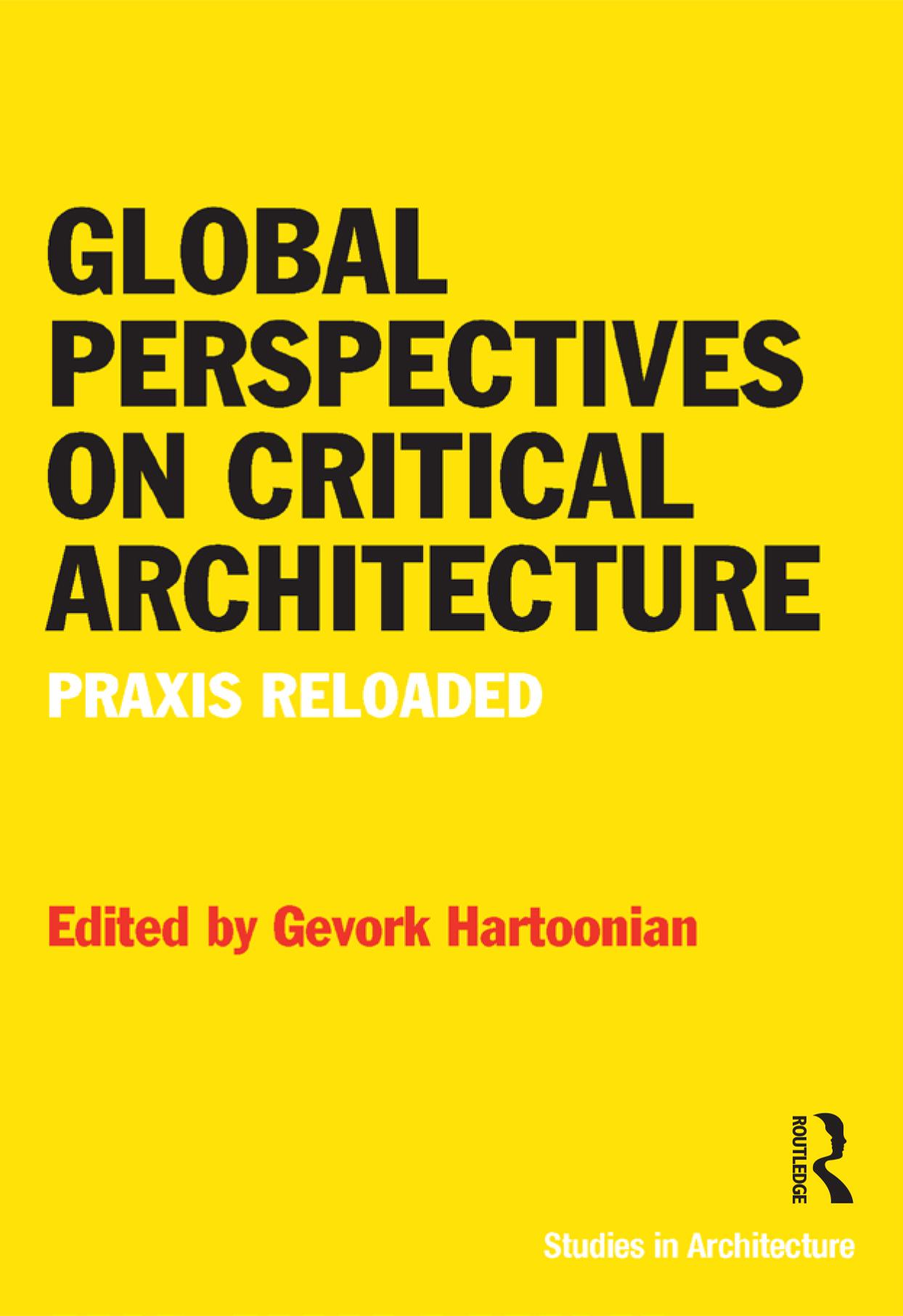
Judging from the debates taking place in both education and practice, it appears that architecture is deeply in crisis. New design and production techniques, together with the globalization of capital and even skilled-labour, have reduced architecture to a commodified object, its aesthetic qualities tapping into the current pervasive desire for the spectacular. These developments have changed the architect’s role in the design and production processes of architecture. Moreover, critical architectural theories, including those of Breton, Heidegger and Benjamin, which explored the concepts of technology, modernism, labour and capital and how technology informed the cultural, along with later theories from the 1960s, which focused more on the architect’s theorization of his/her own design strategies, seem increasingly irrelevant. In an age of digital reproduction and commodification, these theoretical approaches need to be reassessed. Bringing together essays and interviews from leading scholars such as Kenneth Frampton, Peggy Deamer, Bernard Tschumi, Donald Kunze and Marco Biraghi, this volume investigates and critically addresses various dimensions of the present crisis of architecture. It poses questions such as: Is architecture a conservative cultural product servicing a given producer/consumer system? Should architecture’s affiliative ties with capitalism be subjected to a measure of criticism that can be expanded to the entirety of the cultural realm? Is architecture’s infusion into the cultural the reason for the visibility of architecture today? What room does the city leave for architecture beyond the present delirium of spectacle? Should the thematic of various New Left criticisms of capitalism be taken as the premise of architectural criticism? Or alternatively, putting the notion of criticality aside is it enough to confine criticism to the production of insightful and pleasurable texts?
Payez facilement par carte, Klarna, Apple Pay ou Google Pay. Pas satisfait ? Vous avez toujours une garantie de remboursement de 14 jours. En savoir plus dans nos conditions. Si vous avez des questions, envoyez-nous un e-mail à hello@memmo.org.
Memmo facilite tes études, où que tu sois dans le monde. On rassemble tes manuels de cours et des outils d'étude intelligents au même endroit : résumés, quiz, podcasts et flashcards. Et il y a Ted, ton compagnon d'étude qui répond à toutes tes questions. Plus de 50 000 étudiants étudient déjà ici – conçu pour t'aider à apprendre plus vite et à moins stresser.
Tu pourrais aussi aimer
Acheter le livre0