
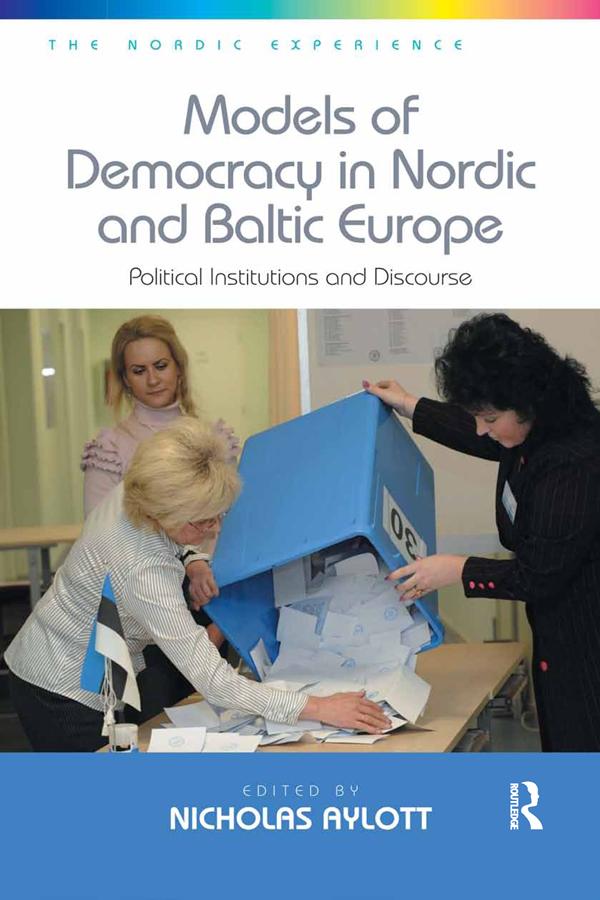
This book explores the ways in which representative democracy works in two neighbouring collections of European states: the Nordic (Denmark, Finland, Iceland, Norway and Sweden) and the Baltic (Estonia, Latvia and Lithuania). Starting from a Nordic vantage point, contributors explore the extent to which aspects of politics function similarly or dissimilarly across the two groups of democratic states, acknowledging the differences in models of democracy that occur within each group. Authors explore the possibility that some of the apparently successful institutional features of Nordic politics have somehow influenced politics in the Baltic states, despite the considerable contextual differences between the two groups. The Nordic-Baltic comparison is particularly worthy of study, given the comparative stability of the Nordic democracies and the half century of occupation by a totalitarian dictatorship that the Baltic states endured. The central, guiding questions are: how does political representation work in countries that have a lot in common, but also a few significant contextual dissimilarities; and what, if any, relationships between the respective styles of democracy can be identified? Using a variety of theories, perspectives and methods, the empirical studies that populate the book seek to offer reflections on these questions.
Payez facilement par carte, Klarna, Apple Pay ou Google Pay. Pas satisfait ? Vous avez toujours une garantie de remboursement de 14 jours. En savoir plus dans nos conditions. Si vous avez des questions, envoyez-nous un e-mail à hello@memmo.org.
Memmo facilite tes études, où que tu sois dans le monde. On rassemble tes manuels de cours et des outils d'étude intelligents au même endroit : résumés, quiz, podcasts et flashcards. Et il y a Ted, ton compagnon d'étude qui répond à toutes tes questions. Plus de 50 000 étudiants étudient déjà ici – conçu pour t'aider à apprendre plus vite et à moins stresser.
Tu pourrais aussi aimer
Acheter le livre0