
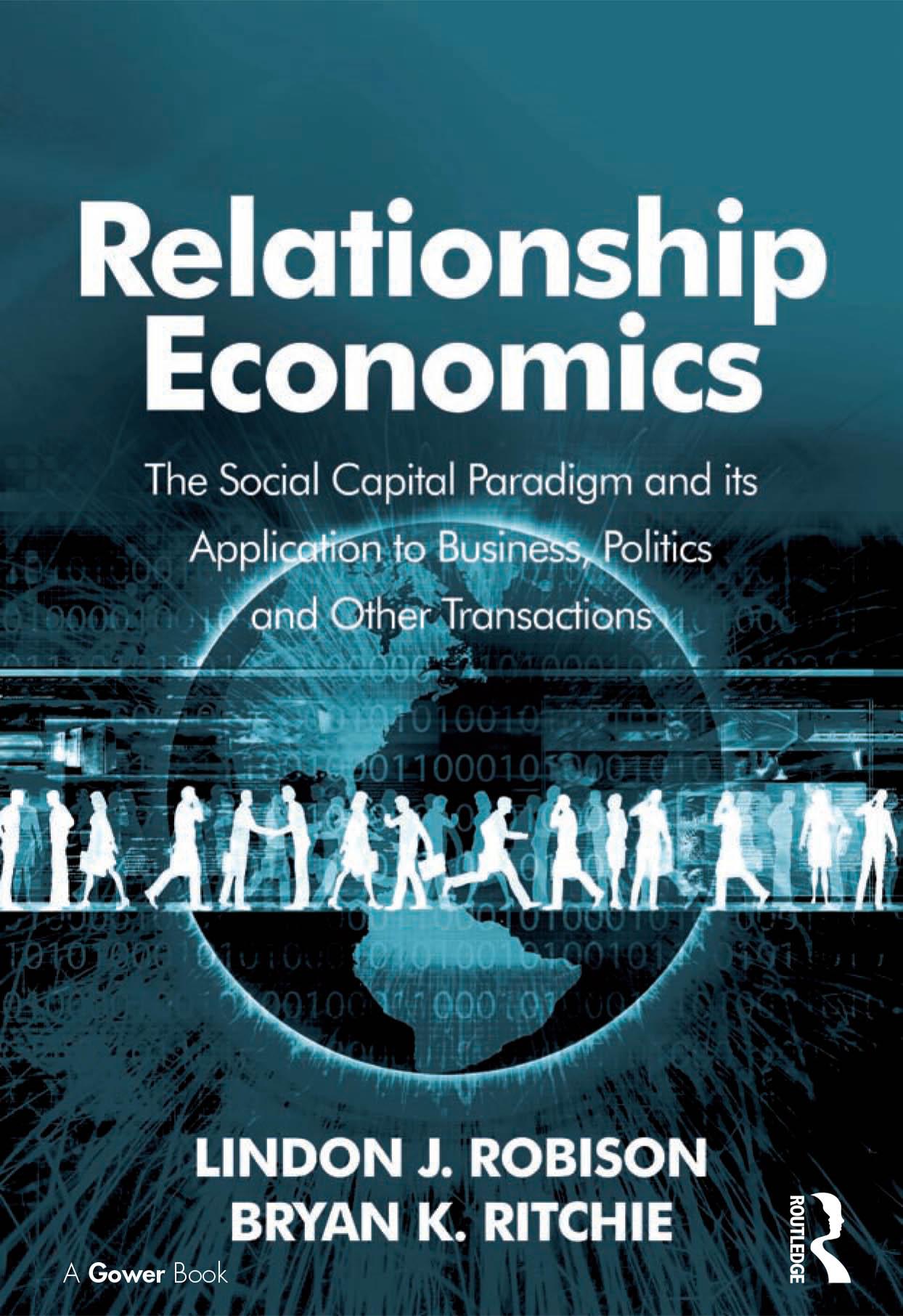
In a 24/7 world and a global economy, there is no doubt that relationships impact virtually every economic transaction. In Relationship Economics, Lindon Robison and Bryan Ritchie argue that what needs to be understood is not just whether relationships matter (which, of course, they do), but also, how much, and in what circumstances they should matter. Providing a rigorous and measurable definition of the way that relationships among individuals create a capital, social capital, that can be saved, spent, and used like other forms of capital, Robison and Ritchie use numerous examples and insightful analysis, to explain how social capital shapes our ability to reduce poverty, understand corruption, encourage democracy, facilitate income equality, and respond to globalization. The first part of the book explains how social capital can be manipulated, stored, expended, and invested. The second part explores how levels of social capital within relationships influence economic transactions both positively and negatively, which in turn shape poverty levels, economic efficiency, levels and types of political participation, and institutional structures.
Payez facilement par carte, Klarna, Apple Pay ou Google Pay. Pas satisfait ? Vous avez toujours une garantie de remboursement de 14 jours. En savoir plus dans nos conditions. Si vous avez des questions, envoyez-nous un e-mail à hello@memmo.org.
Memmo facilite tes études, où que tu sois dans le monde. On rassemble tes manuels de cours et des outils d'étude intelligents au même endroit : résumés, quiz, podcasts et flashcards. Et il y a Ted, ton compagnon d'étude qui répond à toutes tes questions. Plus de 50 000 étudiants étudient déjà ici – conçu pour t'aider à apprendre plus vite et à moins stresser.
Tu pourrais aussi aimer
Acheter le livre0