
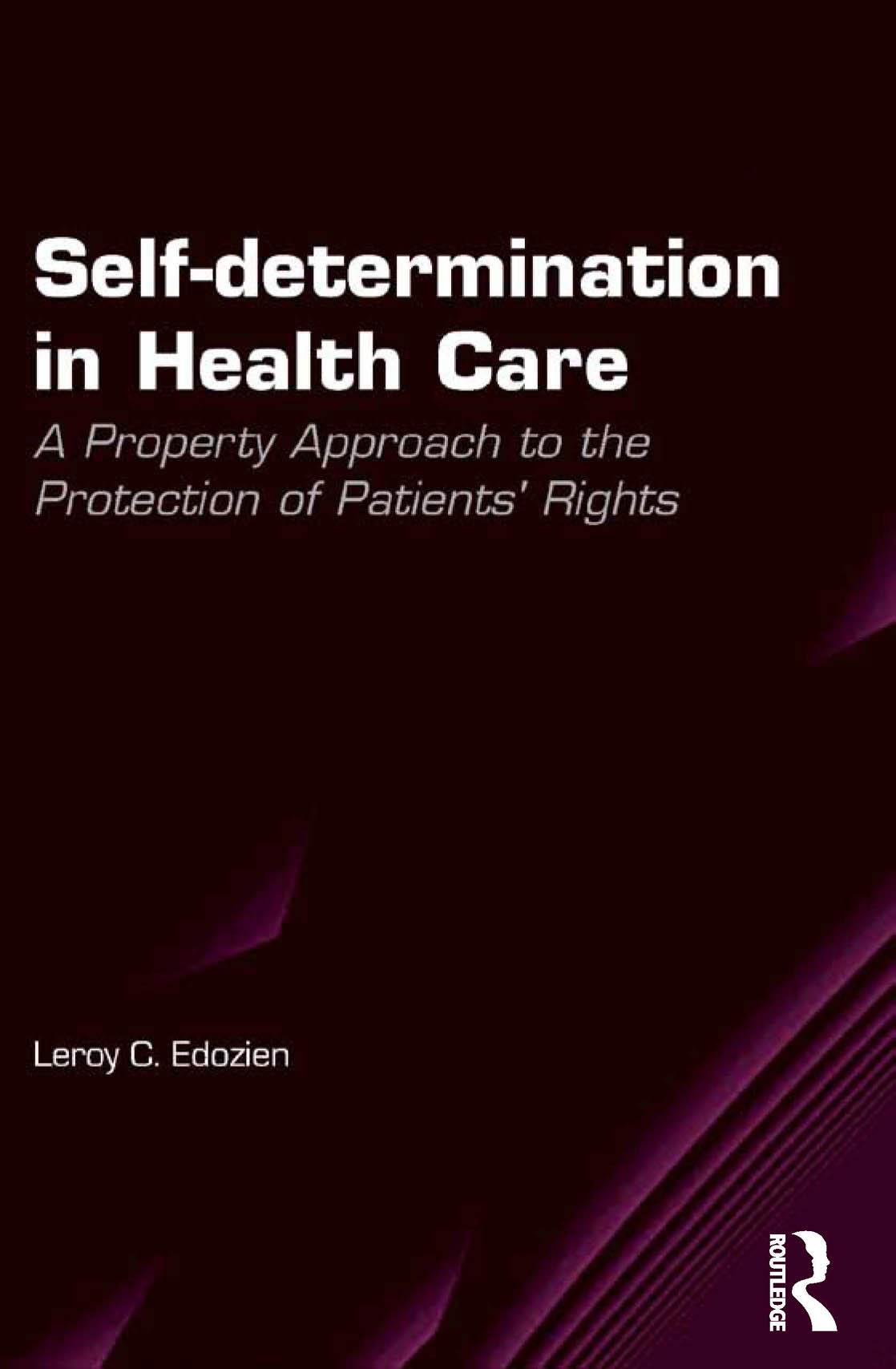
It is generally accepted in legal and bioethical discourse that the patient has a right to self-determination. In practice though, this is often not the case. Paternalism is waning and it is increasingly recognised that there are values other than medical factors which determine the choices that patients make. Unfortunately, these developments have not resulted in huge advances for patient self-determination, which is largely because the consent model has fundamental flaws that constrain its effectiveness. This book sets out to offer an alternative model to consent. In the property model proposed here, the patient’s bodily integrity is protected from unauthorised invasion, and their legitimate expectation to be provided with the relevant information to make an informed decision is taken to be a proprietary right. It is argued that the property model potentially overcomes the limitations of the consent model, including the obstacle caused by the requirement to prove causation in consent cases. The author proposes that this model could in the future provide an alternative or complementary approach for the courts to consider when dealing with cases relating to self-determination in health care.
Payez facilement par carte, Klarna, Apple Pay ou Google Pay. Pas satisfait ? Vous avez toujours une garantie de remboursement de 14 jours. En savoir plus dans nos conditions. Si vous avez des questions, envoyez-nous un e-mail à hello@memmo.org.
Memmo facilite tes études, où que tu sois dans le monde. On rassemble tes manuels de cours et des outils d'étude intelligents au même endroit : résumés, quiz, podcasts et flashcards. Et il y a Ted, ton compagnon d'étude qui répond à toutes tes questions. Plus de 50 000 étudiants étudient déjà ici – conçu pour t'aider à apprendre plus vite et à moins stresser.
Tu pourrais aussi aimer
Acheter le livre0