
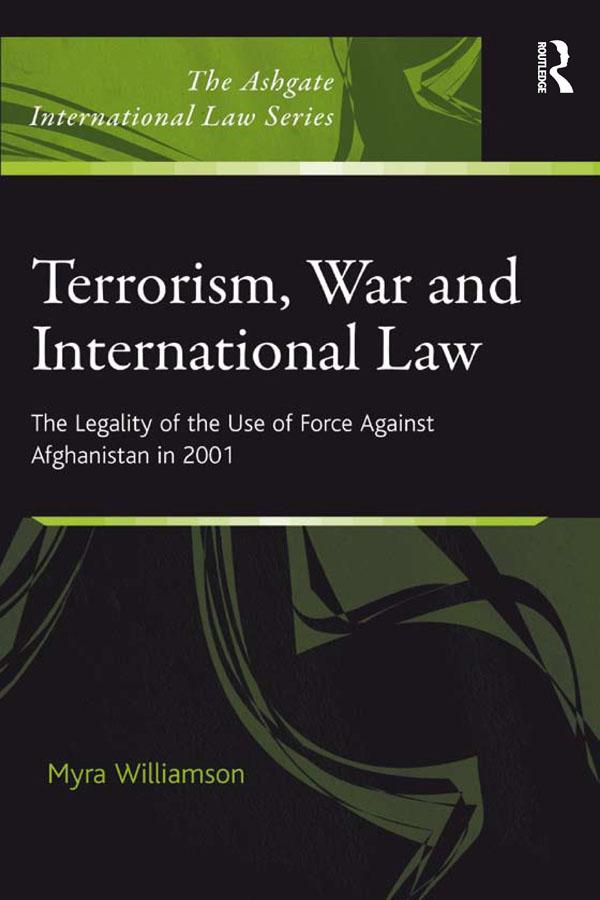
This book analyzes the legality of the use of force by the US, the UK and their NATO allies against Afghanistan in 2001. The work challenges the main ground for resorting to force, namely, self-defence under Article 51 of the United Nations' Charter, by examining each element of Article 51 that ought to have been satisfied in order to legitimise the use of force. It also examines the wider context, including comparable Security Council resolutions in historic situations as well as modern instances where force has been used, such as against Iraq in 2003 and against Lebanon in 2006. As well as making the case against the legality of the use of force, the book addresses wider questions such as the meaning of 'terrorism' in international law, the changing nature of conflict in the twentieth and twenty-first centuries including the impact of non-state actors and an overview of terrorism trends as well as the evolution of limitations on the resort to force from the League of Nations through to 2001. The book concludes with some insight into the possible future implications for the use of force by states, particularly when force is purportedly justified on the grounds of self-defence.
Payez facilement par carte, Klarna, Apple Pay ou Google Pay. Pas satisfait ? Vous avez toujours une garantie de remboursement de 14 jours. En savoir plus dans nos conditions. Si vous avez des questions, envoyez-nous un e-mail à hello@memmo.org.
Memmo facilite tes études, où que tu sois dans le monde. On rassemble tes manuels de cours et des outils d'étude intelligents au même endroit : résumés, quiz, podcasts et flashcards. Et il y a Ted, ton compagnon d'étude qui répond à toutes tes questions. Plus de 50 000 étudiants étudient déjà ici – conçu pour t'aider à apprendre plus vite et à moins stresser.
Tu pourrais aussi aimer
Acheter le livre0