
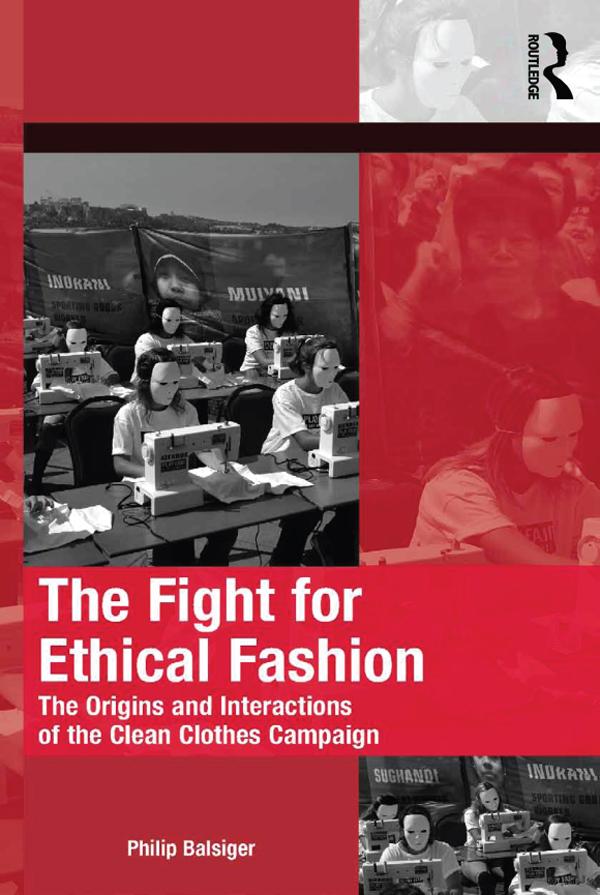
From consumer boycotts and buycotts to social movement campaigns, examples of individual and collective actors forging political struggles on markets are manifold. The clothing market has been a privileged site for such contention, with global clothing brands and retailers being targets of consumer mobilization for the past 20 years. Labels and product lines now attest for the ethical quality of clothes, which has, in turn, given rise to ethical fashion. The Fight for Ethical Fashion unveils the actors and processes that have driven this market transformation through a detailed study of the Europe-wide coordinated campaign on workers’ rights in the global textile industry - the Clean Clothes Campaign. Drawing on insights from qualitative fieldwork using a wide range of empirical sources, Philip Balsiger traces the emergence of this campaign back to the rise of ’consumer campaigns’ and shows how tactics were adapted to market contexts in order to have retailers adopt and monitor codes of conduct. By comparing the interactions between campaigners and their corporate targets in Switzerland and France (two countries with a very different history of consumer mobilization for political issues), this ground-breaking book also reveals how one campaign can provoke contrasting reactions and forms of market change.
Payez facilement par carte, Klarna, Apple Pay ou Google Pay. Pas satisfait ? Vous avez toujours une garantie de remboursement de 14 jours. En savoir plus dans nos conditions. Si vous avez des questions, envoyez-nous un e-mail à hello@memmo.org.
Memmo facilite tes études, où que tu sois dans le monde. On rassemble tes manuels de cours et des outils d'étude intelligents au même endroit : résumés, quiz, podcasts et flashcards. Et il y a Ted, ton compagnon d'étude qui répond à toutes tes questions. Plus de 50 000 étudiants étudient déjà ici – conçu pour t'aider à apprendre plus vite et à moins stresser.
Tu pourrais aussi aimer
Acheter le livre0