
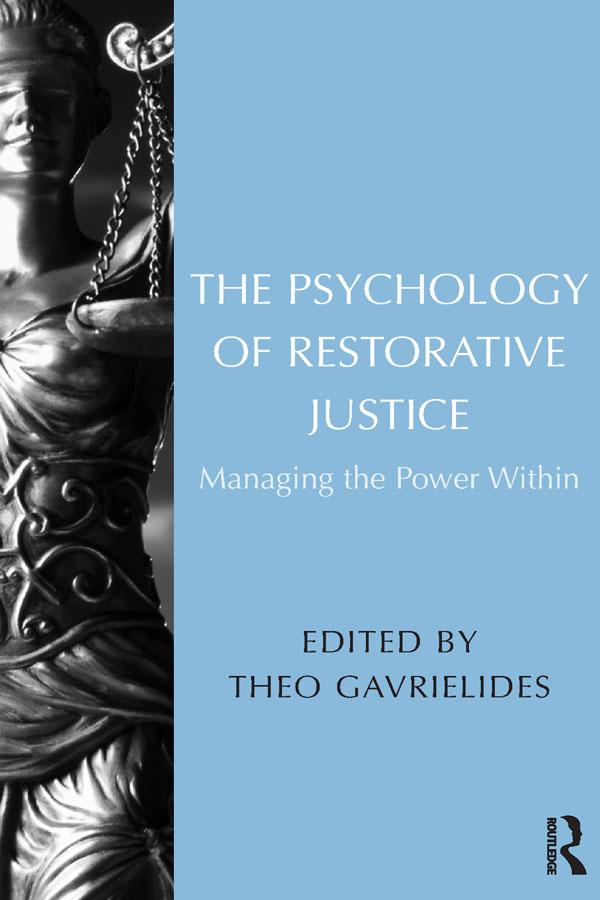
This ground-breaking collection dares to take the next step in the advancement of an autonomous, inter-disciplinary restorative justice field of study. It brings together criminology, social psychology, legal theory, neuroscience, affect-script psychology, sociology, forensic mental health, political sciences, psychology and positive psychology to articulate for the first time a psychological concept of restorative justice. To this end, the book studies the power structures of the restorative justice movement, the very psychology, motivations and emotions of the practitioners who implement it as well as the drivers of its theoreticians and researchers. Furthermore, it examines the strengths and weakness of our own societies and the communities that are called to participate as parties in restorative justice. Their own biases, hunger for power and control, fears and hopes are investigated. The psychology and dynamics between those it aims to reach as well as those who are funding it, including policy makers and politicians, are looked into. All these questions lead to creating an understanding of the psychology of restorative justice. The book is essential reading for academics, researchers, policymakers, practitioners and campaigners.
Payez facilement par carte, Klarna, Apple Pay ou Google Pay. Pas satisfait ? Vous avez toujours une garantie de remboursement de 14 jours. En savoir plus dans nos conditions. Si vous avez des questions, envoyez-nous un e-mail à hello@memmo.org.
Memmo facilite tes études, où que tu sois dans le monde. On rassemble tes manuels de cours et des outils d'étude intelligents au même endroit : résumés, quiz, podcasts et flashcards. Et il y a Ted, ton compagnon d'étude qui répond à toutes tes questions. Plus de 50 000 étudiants étudient déjà ici – conçu pour t'aider à apprendre plus vite et à moins stresser.
Tu pourrais aussi aimer
Acheter le livre0