
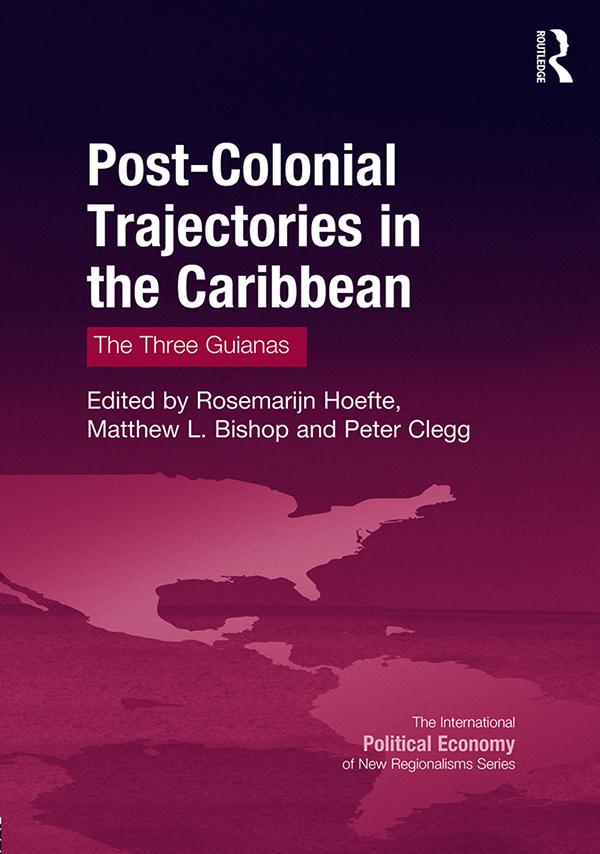
This book compares and contrasts the contemporary development experience of neighbouring, geographically similar countries with an analogous history of exploitation but by three different European colonisers. Studying the so-called ‘Three Guianas’ (Guyana, Suriname and French Guiana) offers a unique opportunity to look for similarities and differences in their contemporary patterns of development, particularly as they grapple with new and complex shifts in the regional, hemispheric and global context. Shaped decisively by their respective historical experiences, Guyana, in tandem with the laissez-faire approach of Britain toward its Caribbean colonies, was decolonised relatively early, in 1966, and has maintained a significant degree of distance from London. The hold of The Hague over Suriname, however, endured well after independence in 1975. French Guiana, by contrast, was decolonised much sooner than both of its neighbours, in 1946, but this was through full integration, thus cementing its place within the political economy and administrative structures of France itself. Traditionally isolated from the Caribbean, the wider Latin American continent and from each other, today, a range of similar issues – such as migration, resource extraction, infrastructure development and energy security – are coming to bear on their societies and provoking deep and complex changes.
Payez facilement par carte, Klarna, Apple Pay ou Google Pay. Pas satisfait ? Vous avez toujours une garantie de remboursement de 14 jours. En savoir plus dans nos conditions. Si vous avez des questions, envoyez-nous un e-mail à hello@memmo.org.
Memmo facilite tes études, où que tu sois dans le monde. On rassemble tes manuels de cours et des outils d'étude intelligents au même endroit : résumés, quiz, podcasts et flashcards. Et il y a Ted, ton compagnon d'étude qui répond à toutes tes questions. Plus de 50 000 étudiants étudient déjà ici – conçu pour t'aider à apprendre plus vite et à moins stresser.