
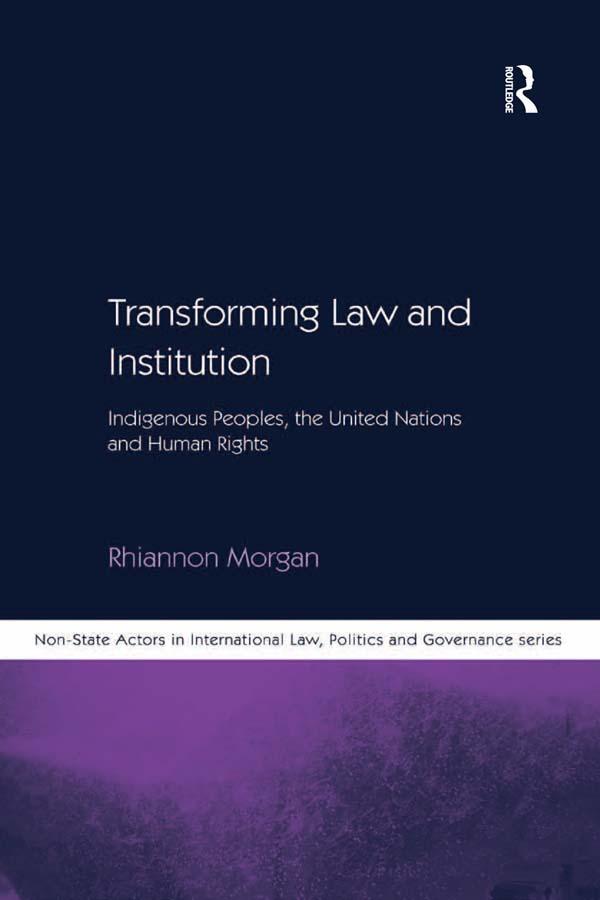
In the past thirty or so years, discussions of the status and rights of indigenous peoples have come to the forefront of the United Nations human rights agenda. During this period, indigenous peoples have emerged as legitimate subjects of international law with rights to exist as distinct peoples. At the same time, we have witnessed the establishment of a number of UN fora and mechanisms on indigenous issues, including the UN Permanent Forum on Indigenous Issues, all pointing to the importance that the UN has come to place on the promotion and protection of indigenous peoples' rights. Morgan describes, analyses, and evaluates the efforts of the global indigenous movement to engender changes in UN discourse and international law on indigenous peoples' rights and to bring about certain institutional developments reflective of a heightened international concern. By the same token, focusing on the interaction of the global indigenous movement with the UN system, this book examines the reverse influence, that is, the ways in which interacting with the UN system has influenced the claims, tactical repertoires, and organizational structures of the movement.
Payez facilement par carte, Klarna, Apple Pay ou Google Pay. Pas satisfait ? Vous avez toujours une garantie de remboursement de 14 jours. En savoir plus dans nos conditions. Si vous avez des questions, envoyez-nous un e-mail à hello@memmo.org.
Memmo facilite tes études, où que tu sois dans le monde. On rassemble tes manuels de cours et des outils d'étude intelligents au même endroit : résumés, quiz, podcasts et flashcards. Et il y a Ted, ton compagnon d'étude qui répond à toutes tes questions. Plus de 50 000 étudiants étudient déjà ici – conçu pour t'aider à apprendre plus vite et à moins stresser.
Tu pourrais aussi aimer
Acheter le livre0