
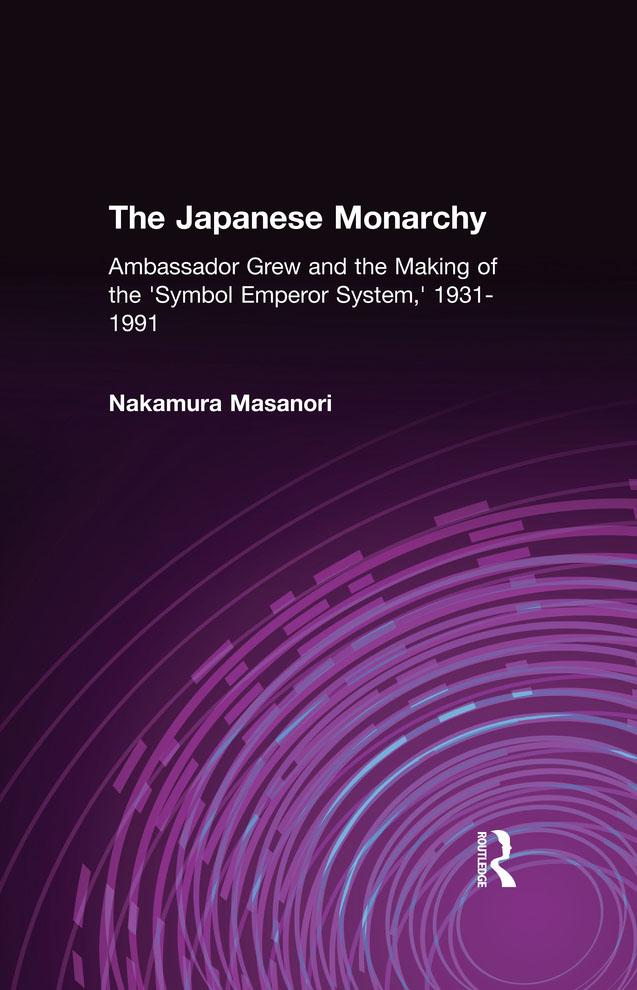
"The Japanese Monarchy, 1931-1991", which created a sensation when first published in Japanese, clarifies US policies toward Japan's symbol emperor system before, during and after World War II. As American ambassador to Japan from 1932 to 1945, Joseph Clark Grew had contacts with groups close to the emperor as well as leading "moderates". Returning to the US after the outbreak of the war, he made many speeches, first condemning Japanese aggression, but later changing his theme from war to peace, even to suggesting that the emperor would be a key asset in stabilising Japanese society after the war, a view which was widely criticised at the time. Later, as under secretary of state, Grew came to play an important role in the formation of postwar US policy on Japan and the emperor. His view that the emperor was a pacifist who opposed and sought to end the war with the US and that thus postwar Japan should be reconstructed with the emperor and the moderates at the centre, was later adopted in the decision of Douglas MacArthur's occupation to preserve the emperor system. That the evolution of an ambassador's convictions could have such a significant impact, even to this day, on postwar US-Japan relations vividly illustrates the importance of truly understanding the history and culture of another country, whether friend or foe.
Payez facilement par carte, Klarna, Apple Pay ou Google Pay. Pas satisfait ? Vous avez toujours une garantie de remboursement de 14 jours. En savoir plus dans nos conditions. Si vous avez des questions, envoyez-nous un e-mail à hello@memmo.org.
Memmo facilite tes études, où que tu sois dans le monde. On rassemble tes manuels de cours et des outils d'étude intelligents au même endroit : résumés, quiz, podcasts et flashcards. Et il y a Ted, ton compagnon d'étude qui répond à toutes tes questions. Plus de 50 000 étudiants étudient déjà ici – conçu pour t'aider à apprendre plus vite et à moins stresser.
Tu pourrais aussi aimer
Acheter le livre0