
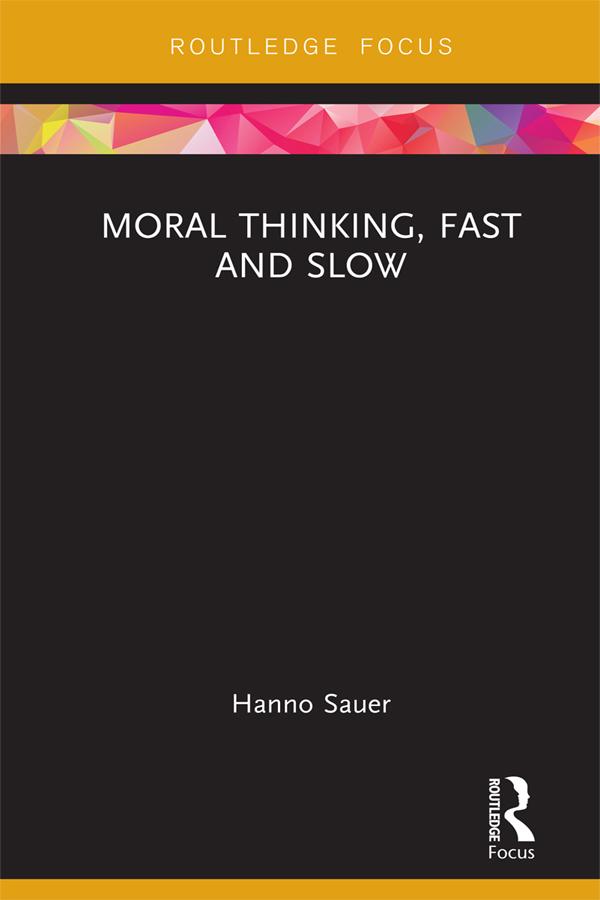
In recent research, dual-process theories of cognition have been the primary model for explaining moral judgment and reasoning. These theories understand moral thinking in terms of two separate domains: one deliberate and analytic, the other quick and instinctive.
This book presents a new theory of the philosophy and cognitive science of moral judgment. Hanno Sauer develops and defends an account of "triple-process" moral psychology, arguing that moral thinking and reasoning are only insufficiently understood when described in terms of a quick but intuitive and a slow but rational type of cognition. This approach severely underestimates the importance and impact of dispositions to initiate and engage in critical thinking – the cognitive resource in charge of counteracting my-side bias, closed-mindedness, dogmatism, and breakdowns of self-control. Moral cognition is based, not on emotion and reason, but on an integrated network of intuitive, algorithmic and reflective thinking.
Moral Thinking, Fast and Slow will be of great interest to philosophers and students of ethics, philosophy of psychology and cognitive science.
Payez facilement par carte, Klarna, Apple Pay ou Google Pay. Pas satisfait ? Vous avez toujours une garantie de remboursement de 14 jours. En savoir plus dans nos conditions. Si vous avez des questions, envoyez-nous un e-mail à hello@memmo.org.
Memmo facilite tes études, où que tu sois dans le monde. On rassemble tes manuels de cours et des outils d'étude intelligents au même endroit : résumés, quiz, podcasts et flashcards. Et il y a Ted, ton compagnon d'étude qui répond à toutes tes questions. Plus de 50 000 étudiants étudient déjà ici – conçu pour t'aider à apprendre plus vite et à moins stresser.