
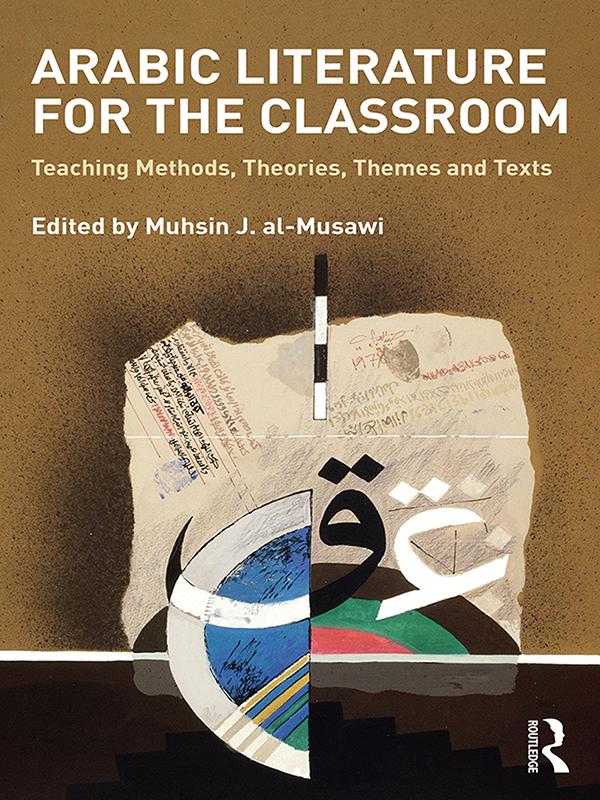
Arabic Literature for the Classroom argues for a more visible presence of Arabic within the humanities and social sciences, stressing the need to make Arabic literature available as a world literature, without damaging its own distinctive characteristics.
The nineteen chapters which make up this book broach theoretical and methodical cultural concerns in teaching literatures from non-American cultures, along with issues of cross-cultural communication, cultural competency and translation. While some chapters bring out the fascinating and ever tantalizing connections between Arabic and the literatures of medieval Europe, others employ specific approaches to teaching particular texts, potential methodologies, themes and a variety of topics that can place Arabic widely in a vast swathe of academic application and learning. Topics that are explored include gender, race, class, trauma, exile, dislocation, love, rape, humor, and cinema, as well as issues that relate to writers and poets, women’s writing and the so called nahdah (revival) movement in the 19th Century.
The comparative framework and multi-disciplinary approach means that this book injects new life into the field of Arabic Literature. It will therefore be an essential resource for students, scholars and teachers of Arabic Literature, as well as for anyone with an interest in learning more about Arabic culture.
Payez facilement par carte, Klarna, Apple Pay ou Google Pay. Pas satisfait ? Vous avez toujours une garantie de remboursement de 14 jours. En savoir plus dans nos conditions. Si vous avez des questions, envoyez-nous un e-mail à hello@memmo.org.
Memmo facilite tes études, où que tu sois dans le monde. On rassemble tes manuels de cours et des outils d'étude intelligents au même endroit : résumés, quiz, podcasts et flashcards. Et il y a Ted, ton compagnon d'étude qui répond à toutes tes questions. Plus de 50 000 étudiants étudient déjà ici – conçu pour t'aider à apprendre plus vite et à moins stresser.