
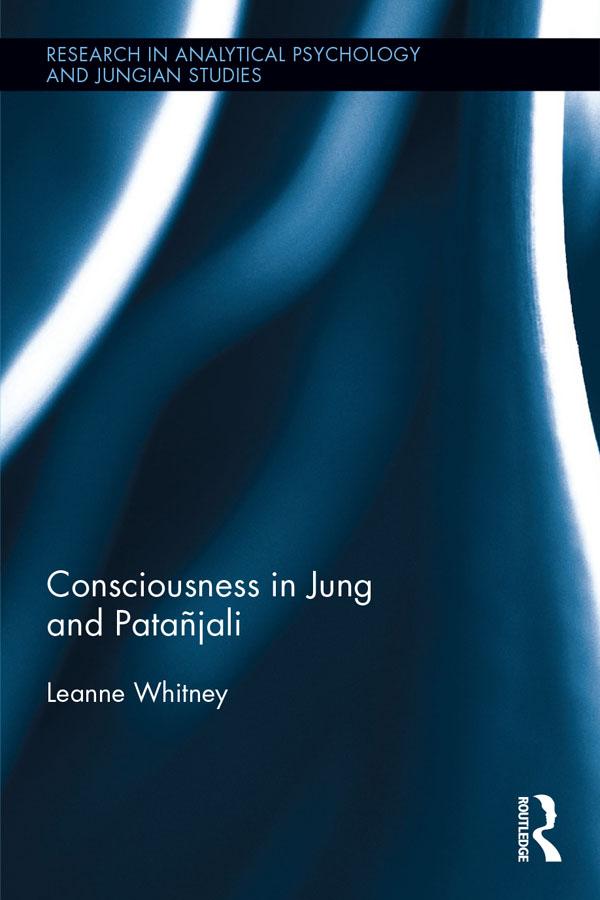
The East-West dialogue increasingly seeks to compare and clarify contrasting views on the nature of consciousness. For the Eastern liberatory models, where a nondual view of consciousness is primary, the challenge lies in articulating how consciousness and the manifold contents of consciousness are singular. Western empirical science, on the other hand, must provide a convincing account of how consciousness arises from matter. By placing the theories of Jung and Patañjali in dialogue with one another, Consciousness in Jung and Patañjali illuminates significant differences between dual and nondual psychological theory and teases apart the essential discernments that theoreticians must make between epistemic states and ontic beliefs.
Patañjali’s Classical Yoga, one of the six orthodox Hindu philosophies, is a classic of Eastern and world thought. Patañjali teaches that notions of a separate egoic "I" are little more than forms of mistaken identity that we experience in our attempts to take ownership of consciousness. Carl Jung’s depth psychology, which remains deeply influential to psychologists, religious scholars, and artists alike, argues that ego-consciousness developed out of the unconscious over the course of evolution. By exploring the work of key theoreticians from both schools of thought, particularly those whose ideas are derived from an integration of theory and practice, Whitney explores the extent to which the seemingly irremediable split between Jung and Patañjali’s ontological beliefs can in fact be reconciled.
This thorough and insightful work will be essential reading for academics, theoreticians, and postgraduate students in the fields of psychology, philosophy of science, and consciousness studies. It will also appeal to those interested in the East–West psychological and philosophical dialogue.
Payez facilement par carte, Klarna, Apple Pay ou Google Pay. Pas satisfait ? Vous avez toujours une garantie de remboursement de 14 jours. En savoir plus dans nos conditions. Si vous avez des questions, envoyez-nous un e-mail à hello@memmo.org.
Memmo facilite tes études, où que tu sois dans le monde. On rassemble tes manuels de cours et des outils d'étude intelligents au même endroit : résumés, quiz, podcasts et flashcards. Et il y a Ted, ton compagnon d'étude qui répond à toutes tes questions. Plus de 50 000 étudiants étudient déjà ici – conçu pour t'aider à apprendre plus vite et à moins stresser.