
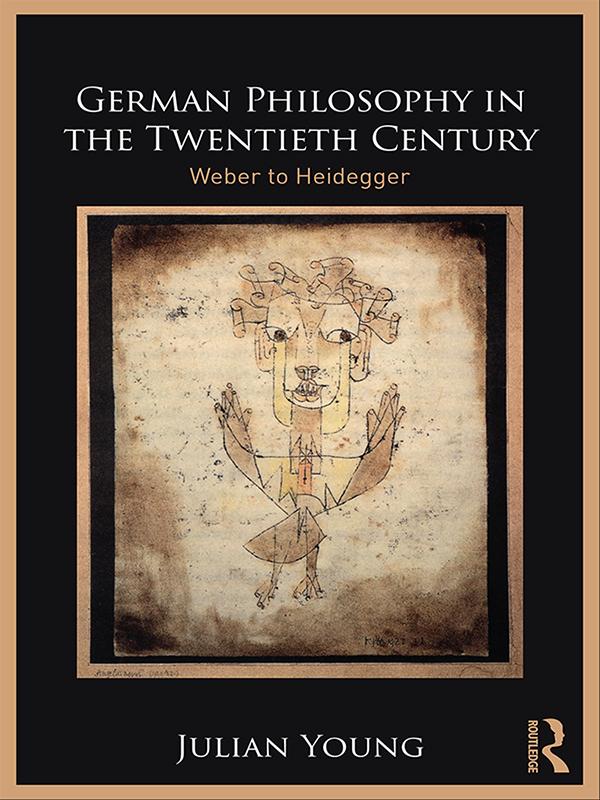
The course of German philosophy in the twentieth century is one of the most exciting, diverse and controversial periods in the history of human thought. It is widely studied and its legacy hotly contested.
In this outstanding introduction, Julian Young explains and assesses the two dominant traditions in modern German philosophy – critical theory and phenomenology – by examining the following key thinkers and topics:
- Max Weber’s setting the agenda for modern German philosophy: the ‘rationalization’ and ‘disenchantment’ of modernity resulting in ‘loss of freedom’ and ‘loss of meaning’
- Horkheimer and Adorno: rationalization and the ‘culture industry’
- Habermas’ defence of Enlightenment rationalization, the ‘unfinished project of modernity’
- Marcuse: a Freud-based vision of a repression-free utopia
- Husserl: overcoming the ‘crisis of humanity’ through phenomenology
- Early Heidegger’s existential phenomenology: ‘authenticity’ as loyalty to ‘heritage’
- Gadamer and ‘fusion of horizons’
- Arendt: the human condition
- Later Heidegger: the re-enchantment of reality.
German Philosophy in the Twentieth Century: Weber to Heidegger is essential reading for students of German philosophy, phenomenology and critical theory, and will also be of interest to students in related fields such as literature, religious studies, and political theory.
Payez facilement par carte, Klarna, Apple Pay ou Google Pay. Pas satisfait ? Vous avez toujours une garantie de remboursement de 14 jours. En savoir plus dans nos conditions. Si vous avez des questions, envoyez-nous un e-mail à hello@memmo.org.
Memmo facilite tes études, où que tu sois dans le monde. On rassemble tes manuels de cours et des outils d'étude intelligents au même endroit : résumés, quiz, podcasts et flashcards. Et il y a Ted, ton compagnon d'étude qui répond à toutes tes questions. Plus de 50 000 étudiants étudient déjà ici – conçu pour t'aider à apprendre plus vite et à moins stresser.