
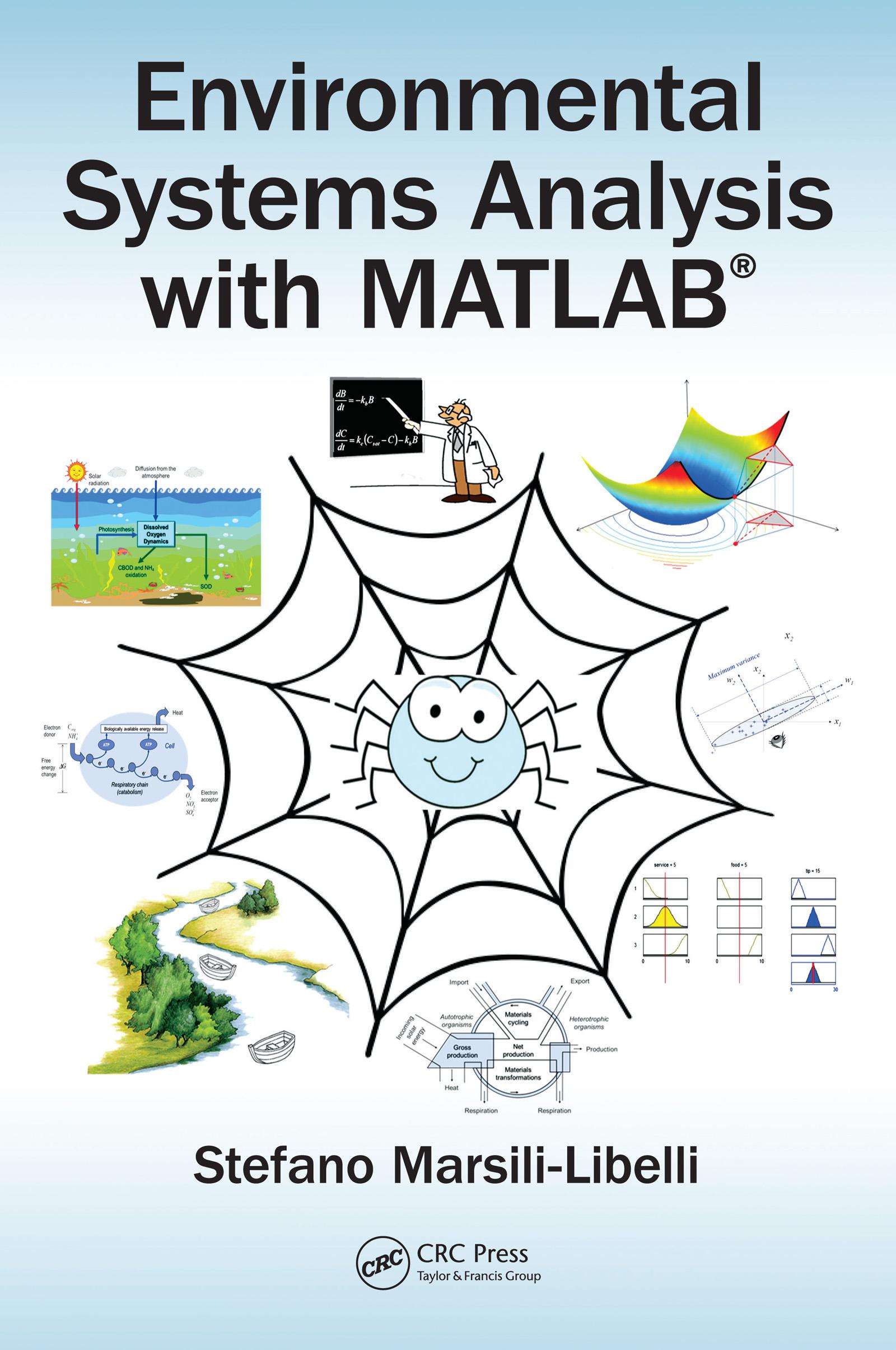
Explore the inner workings of environmental processes using a mathematical approach. Environmental Systems Analysis with MATLAB® combines environmental science concepts and system theory with numerical techniques to provide a better understanding of how our environment works. The book focuses on building mathematical models of environmental systems, and using these models to analyze their behaviors. Designed with the environmental professional in mind, it offers a practical introduction to developing the skills required for managing environmental modeling and data handling.
The book follows a logical sequence from the basic steps of model building and data analysis to implementing these concepts into working computer codes, and then on to assessing their results. It describes data processing (rarely considered in environmental analysis); outlines the tools needed to successfully analyze data and develop models, and moves on to real-world problems. The author illustrates in the first four chapters the methodological aspects of environmental systems analysis, and in subsequent chapters applies them to specific environmental concerns.
The accompanying software bundle is freely downloadable from the book web site. It follows the chapters sequence and provides a hands-on experience, allowing the reader to reproduce the figures in the text and experiment by varying the problem setting. A basic MATLAB literacy is required to get the most out of the software.
Ideal for coursework and self-study, this offering:
- Deals with the basic concepts of environmental modeling and identification, both from the mechanistic and the data-driven viewpoint
- Provides a unifying methodological approach to deal with specific aspects of environmental modeling: population dynamics, flow systems, and environmental microbiology
- Assesses the similarities and the differences of microbial processes in natural and man-made environments
- Analyzes several aquatic ecosystems’ case studies
- Presents an application of an extended Streeter & Phelps (S&P) model
- Describes an ecological method to estimate the bioavailable nutrients in natural waters
- Considers a lagoon ecosystem from several viewpoints, including modeling and management, and more
Payez facilement par carte, Klarna, Apple Pay ou Google Pay. Pas satisfait ? Vous avez toujours une garantie de remboursement de 14 jours. En savoir plus dans nos conditions. Si vous avez des questions, envoyez-nous un e-mail à hello@memmo.org.
Memmo facilite tes études, où que tu sois dans le monde. On rassemble tes manuels de cours et des outils d'étude intelligents au même endroit : résumés, quiz, podcasts et flashcards. Et il y a Ted, ton compagnon d'étude qui répond à toutes tes questions. Plus de 50 000 étudiants étudient déjà ici – conçu pour t'aider à apprendre plus vite et à moins stresser.