
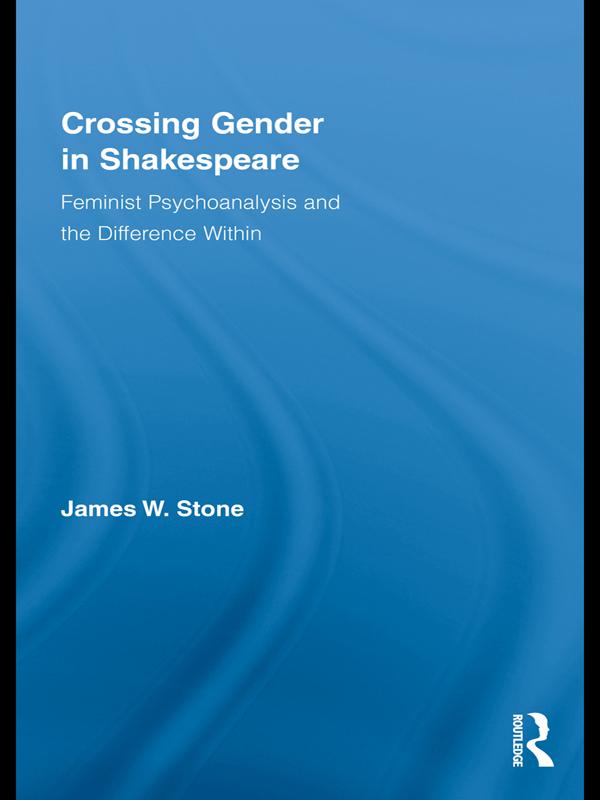
In this book, Stone effects a return to gender, after many years of neglect by Twenty-First-Century critics, via a methodology of close reading that foregrounds moments of sexual decentering and disequilibrium within the text and in the interstices of the dialogue between Shakespeare and his critics. Issues addressed range from the cross dressing of Viola and Imogen to the cross gartering of Malvolio, the sound of "un" and the uncanny lyric narcissism of Richard II, Hamlet’s misogyny, androgyny, and the poison of marital/political "union," Othello’s fears of impotence, rumors of Antony’s emasculation versus the militant yet nurturing triumphalism of Cleopatra’s suicide, and Posthumus’s hysterical reaction to the "woman’s part" in himself and his compensatory fantasies of parthenogenesis. Stone unpacks ideologically powerful but unsustainable male claims to self-identity and sameness, set over against man’s type-gendering of women as the origin of divisive sexual difference, discord, and the dissolution of marriage. Men who blame women for the difference that divides and weakens their sense of unity and sameness to oneself are unconscious that the uncanny feminine is not outside the masculine, its reassuring canny opposite; it is inside the masculine, its uncanny difference from itself.
Payez facilement par carte, Klarna, Apple Pay ou Google Pay. Pas satisfait ? Vous avez toujours une garantie de remboursement de 14 jours. En savoir plus dans nos conditions. Si vous avez des questions, envoyez-nous un e-mail à hello@memmo.org.
Memmo facilite tes études, où que tu sois dans le monde. On rassemble tes manuels de cours et des outils d'étude intelligents au même endroit : résumés, quiz, podcasts et flashcards. Et il y a Ted, ton compagnon d'étude qui répond à toutes tes questions. Plus de 50 000 étudiants étudient déjà ici – conçu pour t'aider à apprendre plus vite et à moins stresser.