
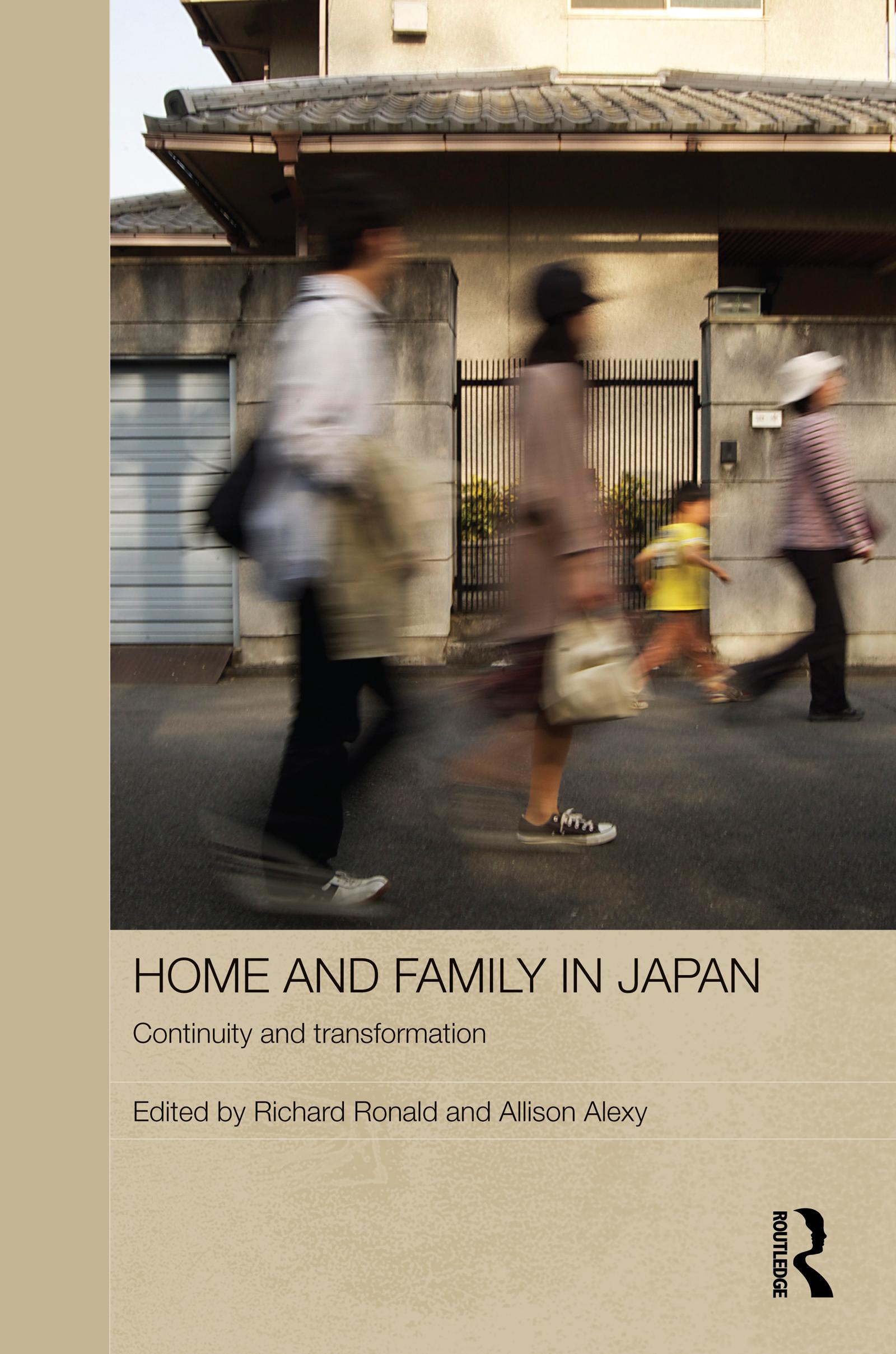
In the Japanese language the word ‘ie’ denotes both the materiality of homes and family relations within. The traditional family and family house - often portrayed in ideal terms as key foundations of Japanese culture and society - have been subject to significant changes in recent years. This book comprehensively addresses various aspects of family life and dwelling spaces, exploring how homes, household patterns and kin relations are reacting to contemporary social, economic and urban transformations, and the degree to which traditional patterns of both houses and households are changing.
The book contextualises the shift from the hegemonic post-war image of standard family life, to the nuclear family and to a situation now where Japanese homes are more likely to include unmarried singles; childless couples; divorcees; unmarried adult children and elderly relatives either living alone or in nursing homes. It discusses how these new patterns are both reinforcing and challenging typical understandings of Japanese family life.
Payez facilement par carte, Klarna, Apple Pay ou Google Pay. Pas satisfait ? Vous avez toujours une garantie de remboursement de 14 jours. En savoir plus dans nos conditions. Si vous avez des questions, envoyez-nous un e-mail à hello@memmo.org.
Memmo facilite tes études, où que tu sois dans le monde. On rassemble tes manuels de cours et des outils d'étude intelligents au même endroit : résumés, quiz, podcasts et flashcards. Et il y a Ted, ton compagnon d'étude qui répond à toutes tes questions. Plus de 50 000 étudiants étudient déjà ici – conçu pour t'aider à apprendre plus vite et à moins stresser.