
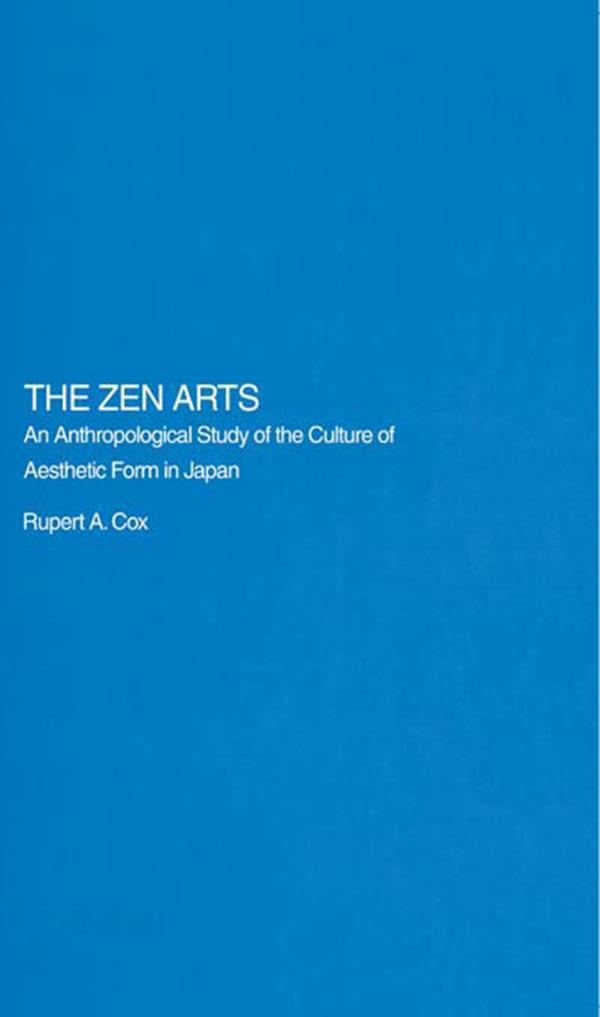
The tea ceremony and the martial arts are intimately linked in the popular and historical imagination with Zen Buddhism, and Japanese culture. They are commonly interpreted as religio-aesthetic pursuits which express core spiritual values through bodily gesture and the creation of highly valued objects. Ideally, the experience of practising the Zen arts culminates in enlightenment.
This book challenges that long-held view and proposes that the Zen arts should be understood as part of a literary and visual history of representing Japanese culture through the arts. Cox argues that these texts and images emerged fully as systems for representing the arts during the modern period, produced within Japan as a form of cultural nationalism and outside Japan as part of an orientalist discourse.
Practitioners' experiences are in fact rarely referred to in terms of Zen or art, but instead are spatially and socially grounded. Combining anthropological description with historical criticism, Cox shows that the Zen arts are best understood in terms of a dynamic relationship between an aesthetic discourse on art and culture and the social and embodied experiences of those who participate in them.
Pages: 296
Catégorie: Kultur-, Genus- & Postkoloniala studier
e-ISBN: 9781136855580
Poids d'expédition: 1.2 kg
Expédié sous: 1-2 jours
Payez facilement par carte, Klarna, Apple Pay ou Google Pay. Pas satisfait ? Vous avez toujours une garantie de remboursement de 14 jours. En savoir plus dans nos conditions. Si vous avez des questions, envoyez-nous un e-mail à hello@memmo.org.
Memmo facilite tes études, où que tu sois dans le monde. On rassemble tes manuels de cours et des outils d'étude intelligents au même endroit : résumés, quiz, podcasts et flashcards. Et il y a Ted, ton compagnon d'étude qui répond à toutes tes questions. Plus de 50 000 étudiants étudient déjà ici – conçu pour t'aider à apprendre plus vite et à moins stresser.
Tu pourrais aussi aimer
Acheter le livre0