
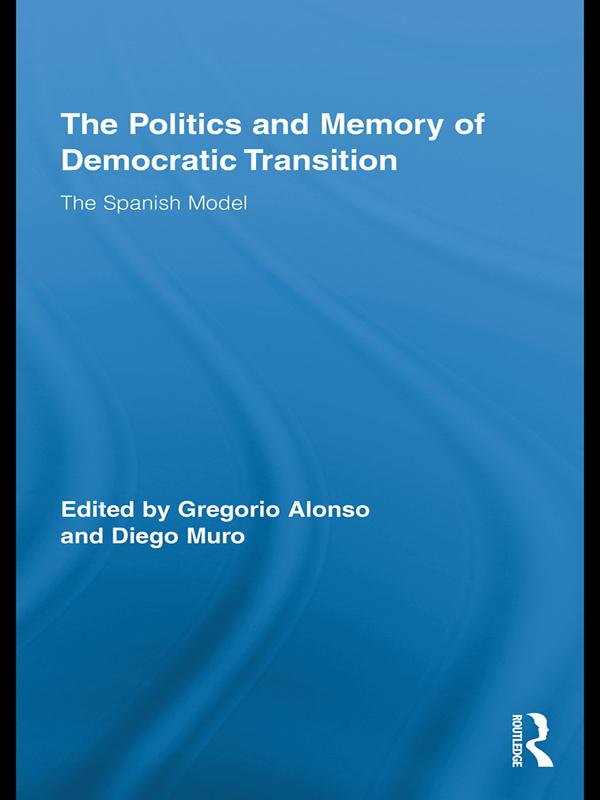
Most accounts on the Spanish transition to democracy of the late 1970s are based on a false dilemma. Its simplest formulation could be: was it the pressure from below, i.e. the organized working classes, students and neighbors associations that triggered political change; or was the elite settlement reached by the regime soft-liners and the moderate sectors of the democratic opposition that established it? This new and innovative volume appraises the movement towards a more democratic Spain from a variety of important perspectives; the collection of essays sheds light on the wide range of crucial processes, institutions and actors involved in the political transformation that operated in the Spanish instance of the Third Wave of democratization.
By making comparisons to other democratic transitions, synthesizing the ideas of several leading Spanish History scholars, as well as incorporating new voices involved in creating the directions of research to come, The Politics and Memory of Democratic Transition offers a thorough and vital look at this key period in contemporary Spanish history, taking stock of critical lessons to be gleaned from the Spanish Transition, and pointing the way toward its future as a democratic nation.
Payez facilement par carte, Klarna, Apple Pay ou Google Pay. Pas satisfait ? Vous avez toujours une garantie de remboursement de 14 jours. En savoir plus dans nos conditions. Si vous avez des questions, envoyez-nous un e-mail à hello@memmo.org.
Memmo facilite tes études, où que tu sois dans le monde. On rassemble tes manuels de cours et des outils d'étude intelligents au même endroit : résumés, quiz, podcasts et flashcards. Et il y a Ted, ton compagnon d'étude qui répond à toutes tes questions. Plus de 50 000 étudiants étudient déjà ici – conçu pour t'aider à apprendre plus vite et à moins stresser.