
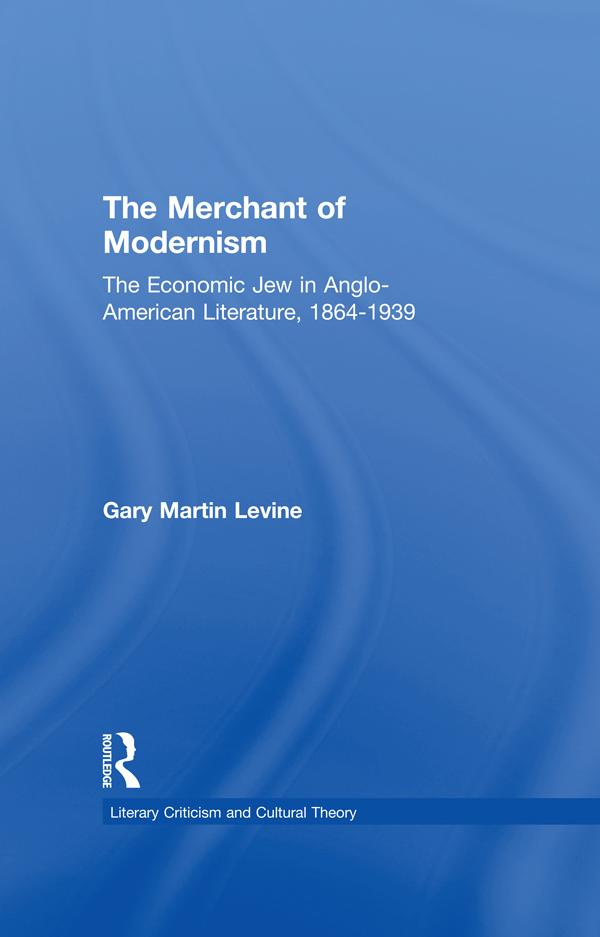
The Merchant of Modernism examines how the figure of the economic Jew symbolizes the struggle of authors from Dickens to Pound to reconcile their critique of capitalism with their own literary practices and how the shifting of the representations of this figure parallels the development of literary Modernism. From the sudden rise of the Victorian stock market to the Great Depression, the prominence of economic Jews in the writings of Charles Dickens, George Eliot, Edith Wharton, Frank Norris, Mark Twain, Henry James, Abraham Cahan, F. Scott Fitzgerald, Ernest Hemingway, Willa Cather, T.S. Eliot, D.H. Lawrence, Wyndham Lewis, Ezra Pound, and James Joyce documents major shifts and events in capitalism, their impact on literature, and advances in economic thought. The Merchant of Modernism provides a sophisticated analysis of the role of economic history and economic thought in shaping both literary Modernism and modern anti-Semitism.
Payez facilement par carte, Klarna, Apple Pay ou Google Pay. Pas satisfait ? Vous avez toujours une garantie de remboursement de 14 jours. En savoir plus dans nos conditions. Si vous avez des questions, envoyez-nous un e-mail à hello@memmo.org.
Memmo facilite tes études, où que tu sois dans le monde. On rassemble tes manuels de cours et des outils d'étude intelligents au même endroit : résumés, quiz, podcasts et flashcards. Et il y a Ted, ton compagnon d'étude qui répond à toutes tes questions. Plus de 50 000 étudiants étudient déjà ici – conçu pour t'aider à apprendre plus vite et à moins stresser.