
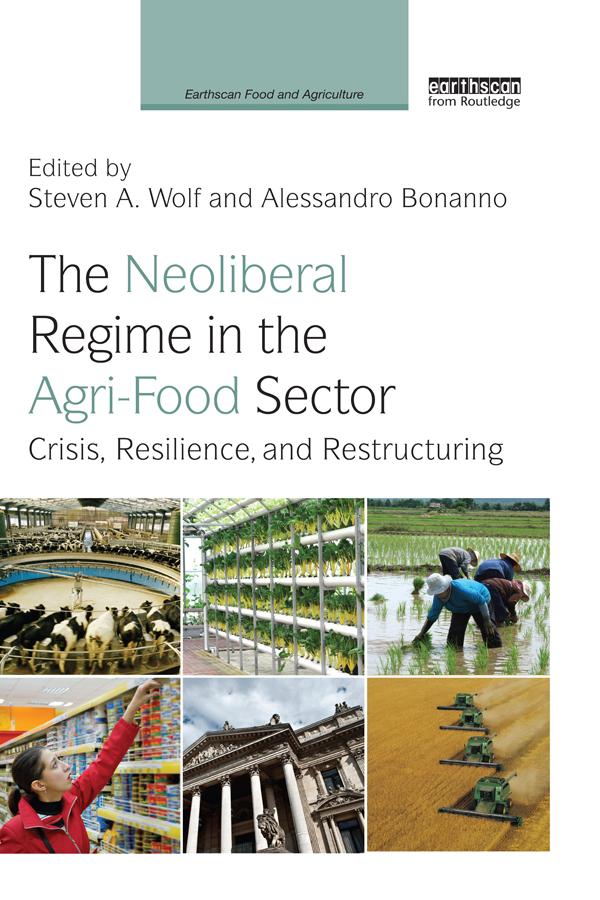
For the last three decades, the Neoliberal regime, emphasising economic growth through deregulation, market integration, expansion of the private sector, and contraction of the welfare state has shaped production and consumption processes in agriculture and food. These institutional arrangements emerged from and advanced academic and popular beliefs about the virtues of private, market-based coordination relative to public, state-based problem solving. This book presents an informed, constructive dialogue around the thesis that the Neoliberal mode of governance has reached some institutional and material limits. Is Neoliberalism exhausted? How should we understand crisis applied to Neoliberalism? What are the opportunities and risks linked to the construction of alternatives? The book advances a critical evaluation of the evidence supporting claims of rupture of, or incursions into, the Neoliberal model. It also analyzes pragmatic responses to these critiques including policy initiatives, social mobilization and experimentation at various scales and points of entry.
The book surveys and synthesizes a range of sociological frames designed to grapple with the concepts of regimes, systemic crisis and transitions. Contributions include historical analysis, comparative analysis and case studies of food and agriculture from around the globe. These highlight particular aspects of crisis and responses, including the potential for continued resilience, a neo-productivist return, as well as the emergence and scaling up of alternative models.
Payez facilement par carte, Klarna, Apple Pay ou Google Pay. Pas satisfait ? Vous avez toujours une garantie de remboursement de 14 jours. En savoir plus dans nos conditions. Si vous avez des questions, envoyez-nous un e-mail à hello@memmo.org.
Memmo facilite tes études, où que tu sois dans le monde. On rassemble tes manuels de cours et des outils d'étude intelligents au même endroit : résumés, quiz, podcasts et flashcards. Et il y a Ted, ton compagnon d'étude qui répond à toutes tes questions. Plus de 50 000 étudiants étudient déjà ici – conçu pour t'aider à apprendre plus vite et à moins stresser.