
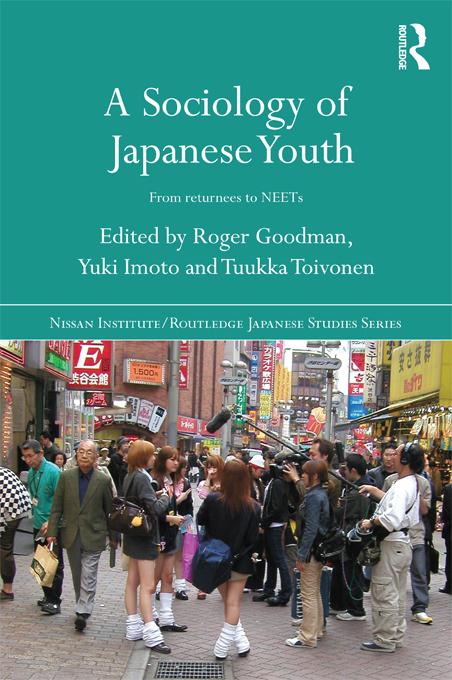
Over the past thirty years, whilst Japan has produced a diverse set of youth cultures which have had a major impact on popular culture across the globe, it has also developed a succession of youth problems which have led to major concerns within the country itself. Drawing on detailed empirical fieldwork, the authors of this volume set these issues in a clearly articulated ‘social constructionist’ framework, and put forth a sociology of Japanese youth problems which argues that there is a certain predictability about the way in which these problems are discovered, defined and dealt with.
The chapters include case studies covering issues such as:
Returnee children (kikokushijo)
Compensated dating (enjo kōsai)
Corporal punishment (taibatsu)
Bullying (ijime)
Child abuse (jidō gyakutai)
The withdrawn youth (hikikomori) and
NEETs (not in education, employment or training)
By examining these various social problems collectively, A Sociology of Japanese Youth explains why particular youth problems appeared when they did and what lessons they can provide for the study of youth problems in other societies.
This book will be of huge interest to students and scholars of Japanese society and culture, the sociology of Japan, Japanese anthropology and the comparative sociology of youth studies.
Payez facilement par carte, Klarna, Apple Pay ou Google Pay. Pas satisfait ? Vous avez toujours une garantie de remboursement de 14 jours. En savoir plus dans nos conditions. Si vous avez des questions, envoyez-nous un e-mail à hello@memmo.org.
Memmo facilite tes études, où que tu sois dans le monde. On rassemble tes manuels de cours et des outils d'étude intelligents au même endroit : résumés, quiz, podcasts et flashcards. Et il y a Ted, ton compagnon d'étude qui répond à toutes tes questions. Plus de 50 000 étudiants étudient déjà ici – conçu pour t'aider à apprendre plus vite et à moins stresser.