
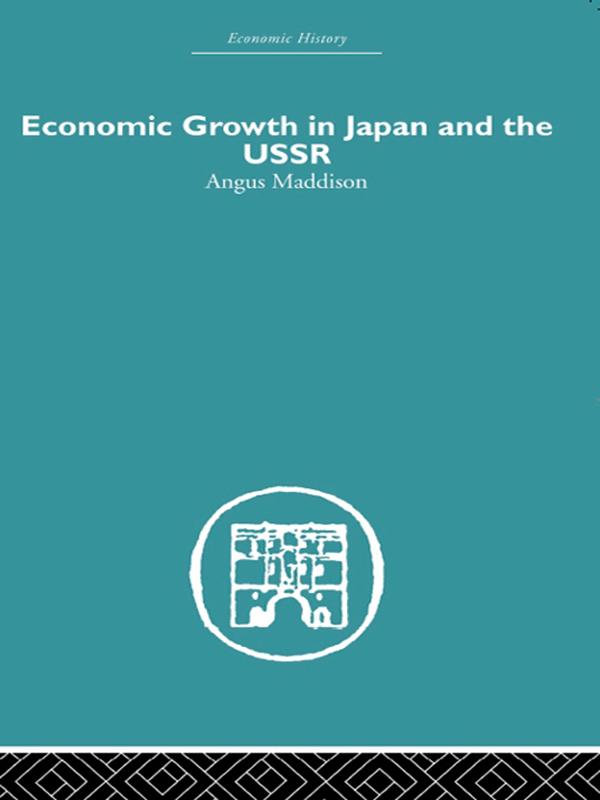
In terms of output, the USSR and Japan account for one-fifth of the world's economy, occupying second and third places behind the United States. Japan has the world's fastest growth of per capita income and the USSR has not lagged far behind. But a century ago they were static feudal societies. This study analyzes the policies which enabled them to transform their economies adn to catch up with the developed world.
The strategies of the two nations adopted have been very different: Japan has maintained small farms and factories, developed a labor-intensive technology, and has successfully penetrated the world export markets. The USSR, on the other hand, has created giant farms and factories adn remained fairly isolated from world trade. Since 1945 teh USSR has devoted one-eighth of her resources to military purposes, Japan practically nothing.
In Economic Growth in Japan and the USSR, Angus Maddison offers a comparative analysis of the growth experience of these two countries that greatly enlarges our knowledge of the development process. A better understanding of their past experience can be particularly illuminating and relevant for economic policy in developing countries today. This classic text was first published in 1969.
Payez facilement par carte, Klarna, Apple Pay ou Google Pay. Pas satisfait ? Vous avez toujours une garantie de remboursement de 14 jours. En savoir plus dans nos conditions. Si vous avez des questions, envoyez-nous un e-mail à hello@memmo.org.
Memmo facilite tes études, où que tu sois dans le monde. On rassemble tes manuels de cours et des outils d'étude intelligents au même endroit : résumés, quiz, podcasts et flashcards. Et il y a Ted, ton compagnon d'étude qui répond à toutes tes questions. Plus de 50 000 étudiants étudient déjà ici – conçu pour t'aider à apprendre plus vite et à moins stresser.