
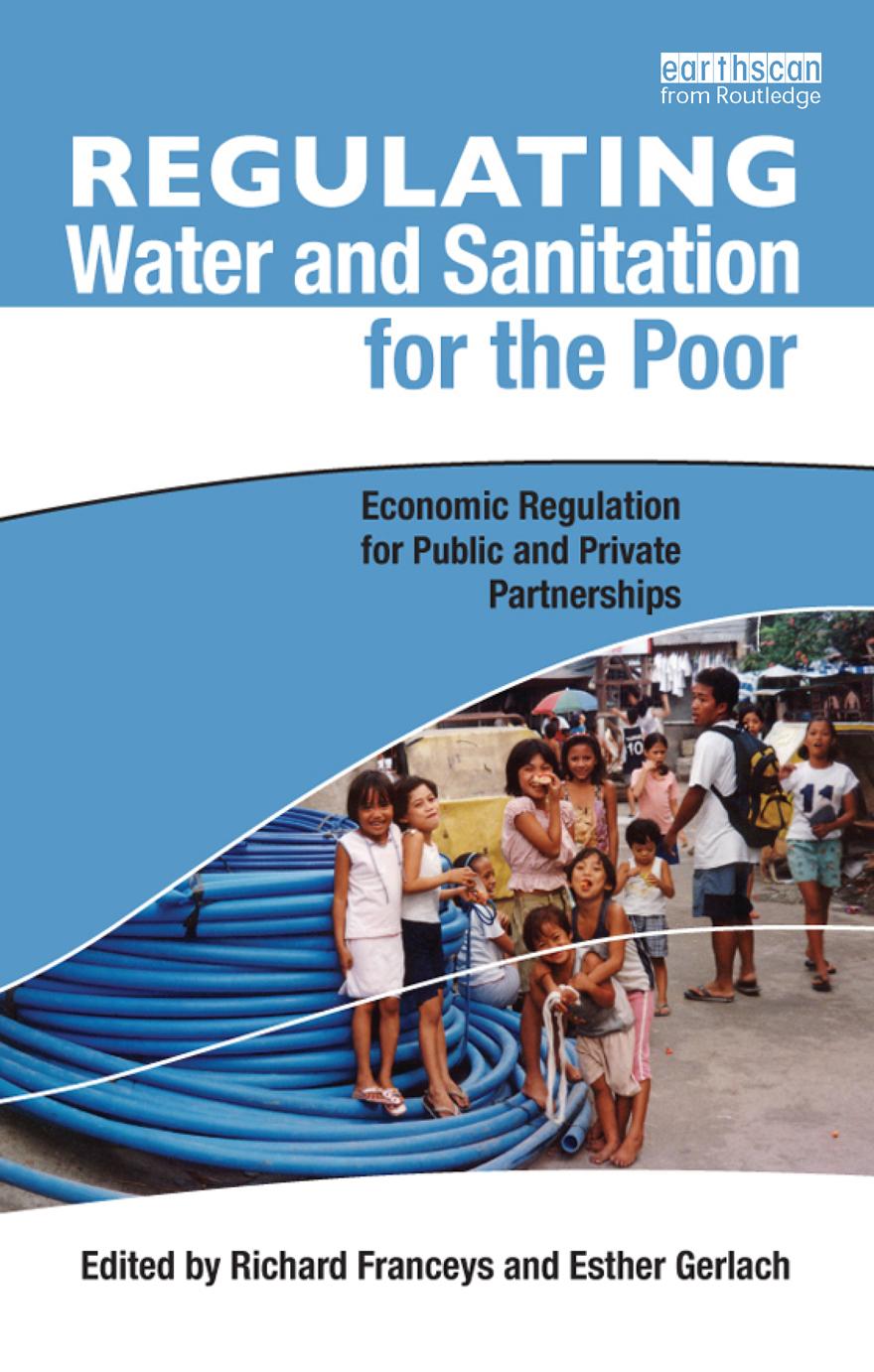
The aim of this book is to present the potential benefits as well as the challenges of introducing a more formal economic regulatory process into the urban water sector arena in lower-income countries. There is a particular focus upon the impact this may have on the poorest, the informal, slum and shanty dwellers of the rapidly growing cities. Economic regulation, usually introduced in the context of private operation of monopoly water supply, can deliver objectivity and transparency in the price-setting process for public as well as private providers. The book describes and analyses these issues through a consideration of ten country case studies. As a starting point, the current situation for the provision of water and sanitation services for the poorest through non-regulated public providers in India and Uganda is reviewed. Comparative chapters are then presented on Ghana, Philippines, Bolivia, Jordan, Zambia and Indonesia, all with varying degrees of private sector involvement and regulation. Finally the experiences of two richer countries are considered - Chile and England, countries with the longest experience of economic regulation and the 'most privatized' suppliers. In all cases there is a focus on the very necessary role of customer involvement in price-setting and service monitoring and on the role of alternative (private) service providers.
Payez facilement par carte, Klarna, Apple Pay ou Google Pay. Pas satisfait ? Vous avez toujours une garantie de remboursement de 14 jours. En savoir plus dans nos conditions. Si vous avez des questions, envoyez-nous un e-mail à hello@memmo.org.
Memmo facilite tes études, où que tu sois dans le monde. On rassemble tes manuels de cours et des outils d'étude intelligents au même endroit : résumés, quiz, podcasts et flashcards. Et il y a Ted, ton compagnon d'étude qui répond à toutes tes questions. Plus de 50 000 étudiants étudient déjà ici – conçu pour t'aider à apprendre plus vite et à moins stresser.
Tu pourrais aussi aimer
Acheter le livre0