
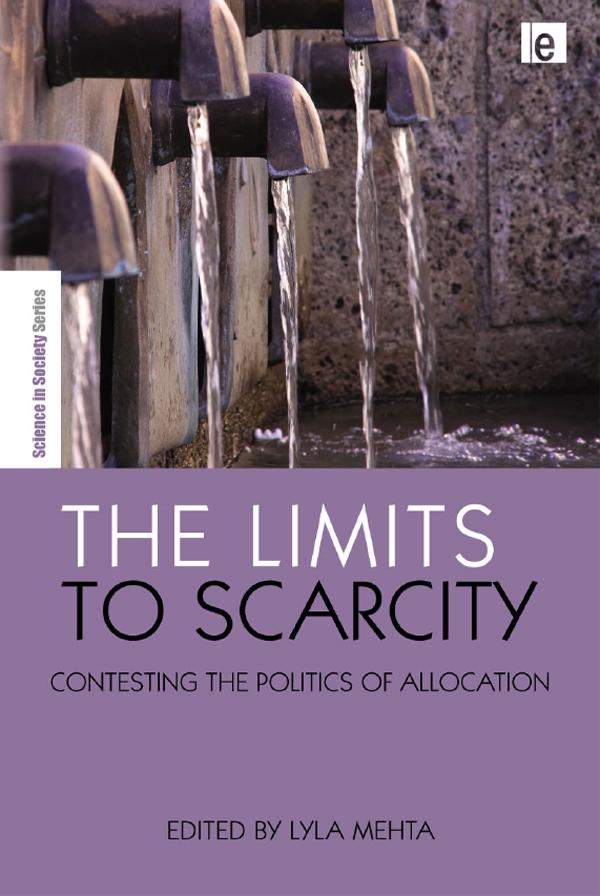
Scarcity is considered a ubiquitous feature of the human condition. It underpins much of modern economics and is widely used as an explanation for social organisation, social conflict and the resource crunch confronting humanity's survival on the planet. It is made out to be an all-pervasive fact of our lives - be it of housing, food, water or oil. But has the conception of scarcity been politicized, naturalized, and universalized in academic and policy debates? Has overhasty recourse to scarcity evoked a standard set of market, institutional and technological solutions which have blocked out political contestations, overlooking access as a legitimate focus for academic debates as well as policies and interventions?
Theoretical and empirical chapters by leading academics and scholar-activists grapple with these issues by questioning scarcity's taken-for-granted nature. They examine scarcity debates across three of the most important resources - food, water and energy - and their implications for theory, institutional arrangements, policy responses and innovation systems.
The book looks at how scarcity has emerged as a totalizing discourse in both the North and South. The 'scare' of scarcity has led to scarcity emerging as a political strategy for powerful groups. Aggregate numbers and physical quantities are trusted, while local knowledges and experiences of scarcity that identify problems more accurately and specifically are ignored. Science and technology are expected to provide 'solutions', but such expectations embody a multitude of unexamined assumptions about the nature of the 'problem', about the technologies and about the institutional arrangements put forward as a 'fix.' Through this examination the authors demonstrate that scarcity is not a natural condition: the problem lies in how we see scarcity and the ways in which it is socially generated.
Payez facilement par carte, Klarna, Apple Pay ou Google Pay. Pas satisfait ? Vous avez toujours une garantie de remboursement de 14 jours. En savoir plus dans nos conditions. Si vous avez des questions, envoyez-nous un e-mail à hello@memmo.org.
Memmo facilite tes études, où que tu sois dans le monde. On rassemble tes manuels de cours et des outils d'étude intelligents au même endroit : résumés, quiz, podcasts et flashcards. Et il y a Ted, ton compagnon d'étude qui répond à toutes tes questions. Plus de 50 000 étudiants étudient déjà ici – conçu pour t'aider à apprendre plus vite et à moins stresser.