
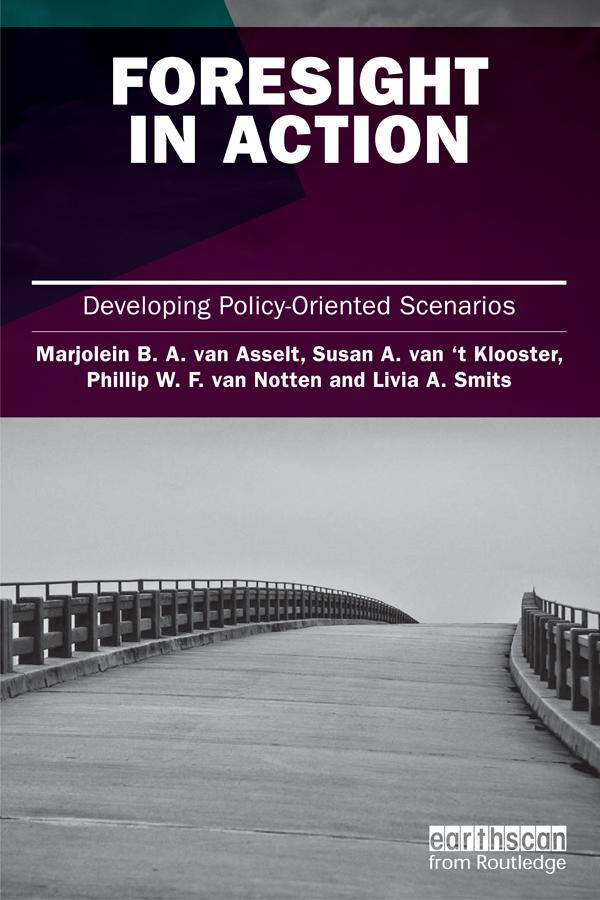
Assessing the future is vital in informing public policy decisions. One of the most widespread approaches is the development of scenarios, which are alternative hypothetical futures. Research has indicated, however, that the reality of how professionals go about employing scenarios is often starkly at odds with the theory - a finding that has important ramifications for how the resulting images of the future should be interpreted. It also shows the need for rewriting and updating theory.
This book, based on an intensive five year study of how experts actually go about assessing the future, provides a groundbreaking examination of foresighting in action. Obtained via ethnographic techniques, the results lay bare for the first time the real processes by which scenarios are made. It is also the first book to examine foresighting for public policy, which is so often overlooked in favour of business practice. From handling of discontinuity to historical determinism, the analysis reveals and explains why foresight is difficult and what the major pitfalls are. Each chapter ends with a toolkit of recommendations for practice. The book aims to help readers to reflect on their own practices of public-oriented foresight and thus to foster a deeper understanding of the key principles and challenges. Ultimately, this will lead to better informed decision making.
Payez facilement par carte, Klarna, Apple Pay ou Google Pay. Pas satisfait ? Vous avez toujours une garantie de remboursement de 14 jours. En savoir plus dans nos conditions. Si vous avez des questions, envoyez-nous un e-mail à hello@memmo.org.
Memmo facilite tes études, où que tu sois dans le monde. On rassemble tes manuels de cours et des outils d'étude intelligents au même endroit : résumés, quiz, podcasts et flashcards. Et il y a Ted, ton compagnon d'étude qui répond à toutes tes questions. Plus de 50 000 étudiants étudient déjà ici – conçu pour t'aider à apprendre plus vite et à moins stresser.