
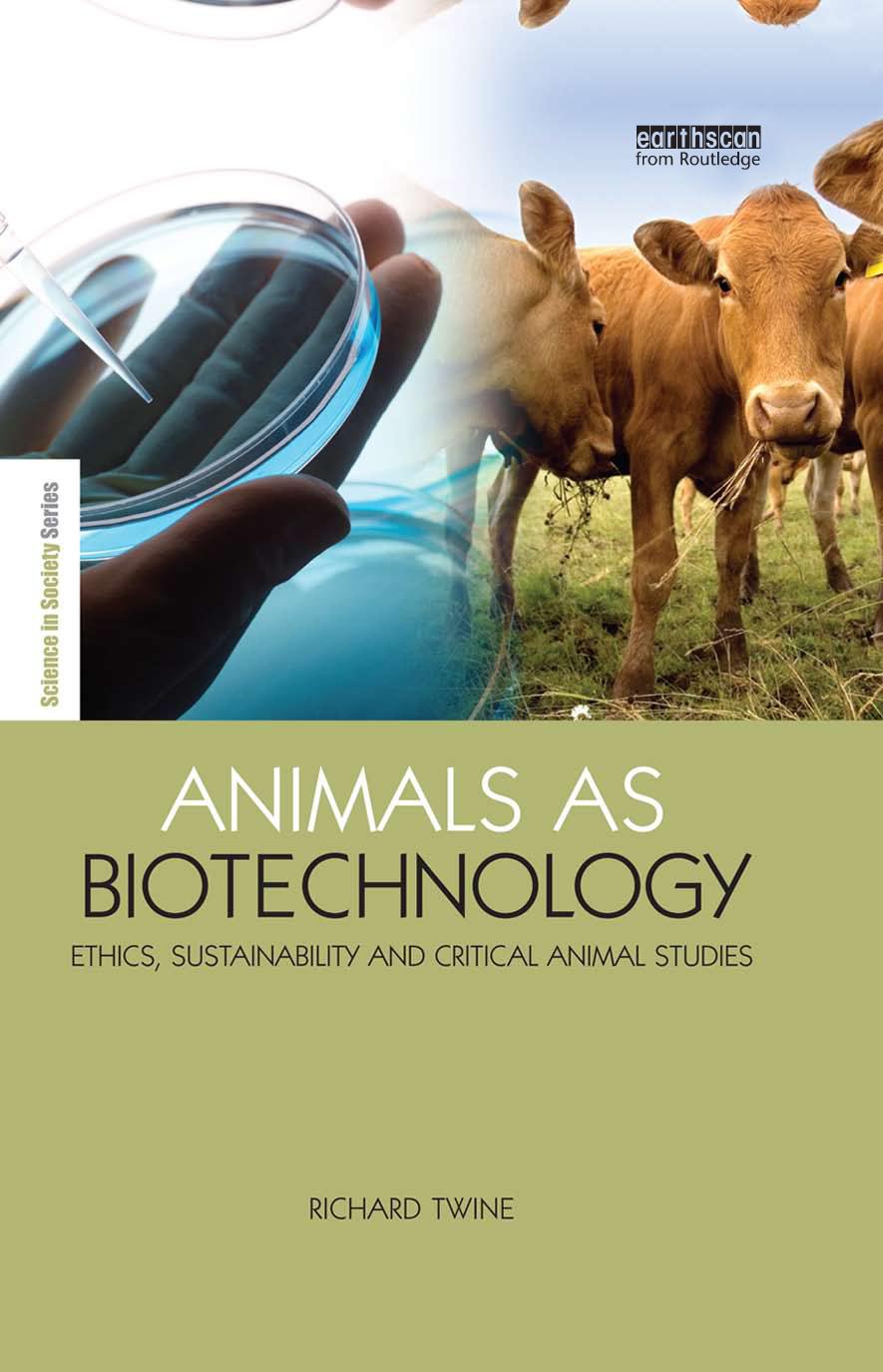
In Animals as Biotechnology sociologist Richard Twine places the question of human/animal relations at the heart of sustainability and climate change debates. The book is shaped by the emergence of two contradictory trends within our approach to nonhuman animals: the biotechnological turn in animal sciences, which aims to increase the efficiency and profitability of meat and dairy production; and the emerging field of critical animal studies - mostly in the humanities and social sciences - which works to question the nature of our relations with other animals.
The first part of the book focuses on ethics, examining critically the dominant paradigms of bioethics and power relations between human and non-human. The second part considers animal biotechnology and political economy, examining commercialisation and regulation. The final part of the book centres on discussions of sustainability, limits and an examination of the prospects for animal ethics if biotechnology becomes part of the dominant agricultural paradigm. Twine concludes by considering whether growing calls to reduce our consumption of meat/dairy products in the face of climate change threats are in fact complicit with an anthropocentric understanding of sustainability and that what is needed is a more fundamental ethical and political questioning of relations and distinctions between humans, animals and nature.
Payez facilement par carte, Klarna, Apple Pay ou Google Pay. Pas satisfait ? Vous avez toujours une garantie de remboursement de 14 jours. En savoir plus dans nos conditions. Si vous avez des questions, envoyez-nous un e-mail à hello@memmo.org.
Memmo facilite tes études, où que tu sois dans le monde. On rassemble tes manuels de cours et des outils d'étude intelligents au même endroit : résumés, quiz, podcasts et flashcards. Et il y a Ted, ton compagnon d'étude qui répond à toutes tes questions. Plus de 50 000 étudiants étudient déjà ici – conçu pour t'aider à apprendre plus vite et à moins stresser.