
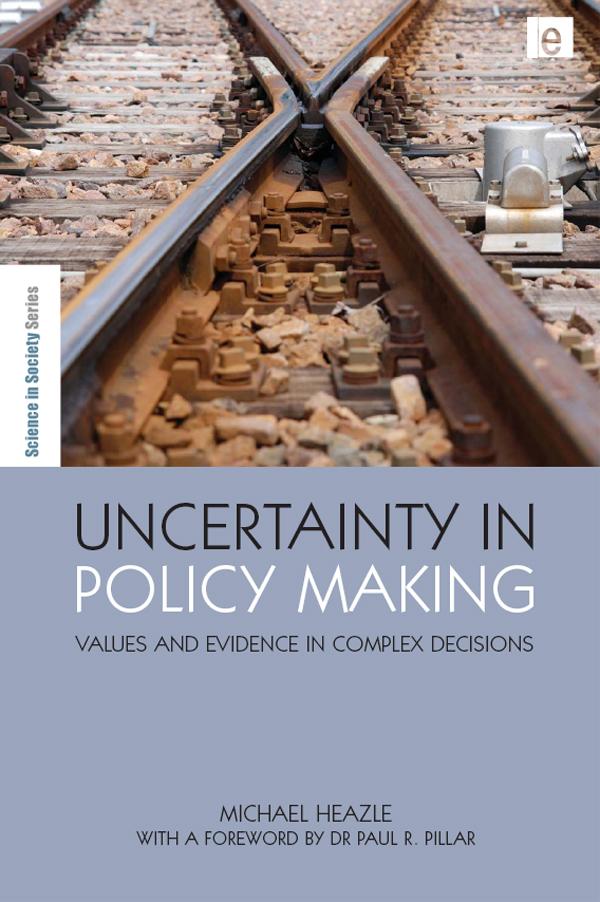
Uncertainty in Policy Making explores how uncertainty is interpreted and used by policy makers, experts and politicians. It argues that conventional notions of rational, evidence-based policy making - hailed by governments and organisations across the world as the only way to make good policy - is an impossible aim in highly complex and uncertain environments; the blind pursuit of such a 'rational' goal is in fact irrational in a world of competing values and interests.
The book centres around two high-profile and important case studies: the Iraq war and climate change policy in the US, UK and Australia. Based on three years' research, including interviews with experts such as Hans Blix, Paul Pillar, and Brian Jones, these two case studies show that the treatment of uncertainty issues in specialist advice is largely determined by how well the advice fits with or contradicts the policy goals and orientation of the policy elite. Instead of allowing the debates to be side-tracked by arguments over whose science or expert advice is 'more right', we must accept that uncertainty in complex issues is unavoidable and recognise the values and interests that lie at the heart of the issues. The book offers a 'hedging' approach which will enable policy makers to manage rather than eliminate uncertainty.
Payez facilement par carte, Klarna, Apple Pay ou Google Pay. Pas satisfait ? Vous avez toujours une garantie de remboursement de 14 jours. En savoir plus dans nos conditions. Si vous avez des questions, envoyez-nous un e-mail à hello@memmo.org.
Memmo facilite tes études, où que tu sois dans le monde. On rassemble tes manuels de cours et des outils d'étude intelligents au même endroit : résumés, quiz, podcasts et flashcards. Et il y a Ted, ton compagnon d'étude qui répond à toutes tes questions. Plus de 50 000 étudiants étudient déjà ici – conçu pour t'aider à apprendre plus vite et à moins stresser.