
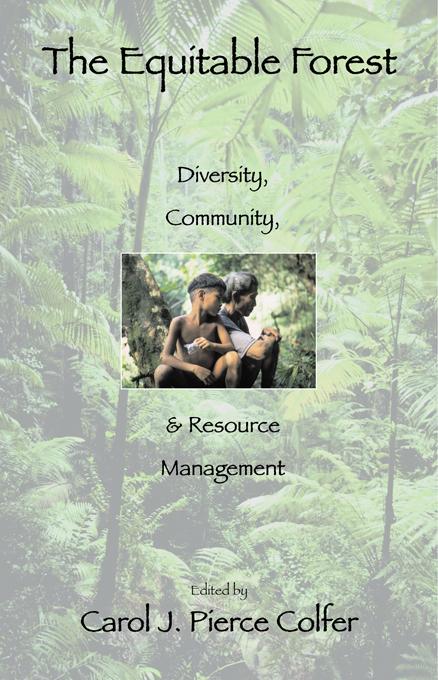
While there continues to be refinement in defining and assessing sustainable management, there remains the urgent need for policies that create the conditions that support sustainability and can halt or slow destructive practices already underway. Carol Colfer and her contributors maintain that standardized solutions to forest problems from afar have failed to address both human and environmental needs. Such approaches, they argue, often neglect the knowledge that local stakeholders have accumulated over generations as forest managers and do not address issues involving the diversity and well-being of groups within communities. The contributors note that these problems persist despite clear evidence that equity and social relationships, including gender roles, are important factors in the ways that communities adapt to change and manage forest resources overall. The Equitable Forest offers an alternative to traditional, externally organized strategies for forest management. Termed adaptive collaborative management (ACM), the approach tries to better acknowledge the diversity, complexity, and unpredictability of human and natural systems. ACM works to strengthen local institutions and use the knowledge and capacity of groups in local communities to enhance the health and well-being of both forests and the people who live in and around them. The Equitable Forest provides a detailed explanation of the descriptive, analytical, and methodological tools of ACM, along with accounts of early stages of its implementation in tropical regions of Asia, Africa, and Latin America. Although the contributors make it clear that it is too soon to evaluate the efficacy of ACM, their work is supported by evidence that rural communities do make important contributions when involved in formal forest management; that management strategies are most effective when flexible and tailored to local contexts; and that efforts by outside governmental and nongovernmental organizations to support local management are feasible from the policymaking perspective, and desirable for their impact on human, economic, and environmental well-being.
Payez facilement par carte, Klarna, Apple Pay ou Google Pay. Pas satisfait ? Vous avez toujours une garantie de remboursement de 14 jours. En savoir plus dans nos conditions. Si vous avez des questions, envoyez-nous un e-mail à hello@memmo.org.
Memmo facilite tes études, où que tu sois dans le monde. On rassemble tes manuels de cours et des outils d'étude intelligents au même endroit : résumés, quiz, podcasts et flashcards. Et il y a Ted, ton compagnon d'étude qui répond à toutes tes questions. Plus de 50 000 étudiants étudient déjà ici – conçu pour t'aider à apprendre plus vite et à moins stresser.
Tu pourrais aussi aimer
Acheter le livre0