
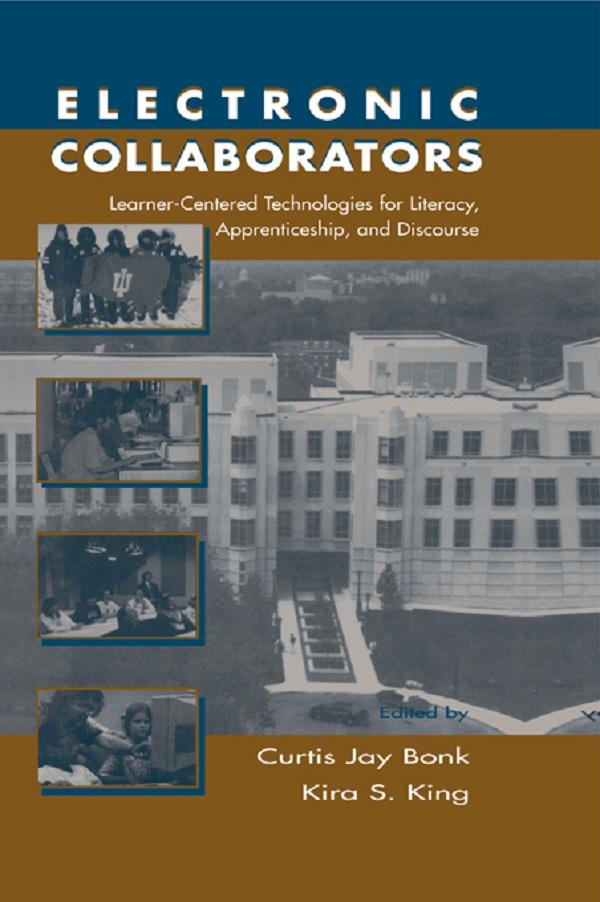
Two developments in recent years have converged to dramatically alter most conceptions of the teaching and learning process. First, technology has become increasingly interactive and distributed, such that individual learners have available the means to participate in incredibly complex networks of information, resources, and instruction. As these technological advancements facilitate interaction across classroom, university, and worldwide learning communities in both real-time and delayed formats, various instructional design and implementation problems spring forth. Second, the conventional teacher-centered model wherein knowledge is transmitted from the teacher to the learner is being replaced by social constructivist and learner-centered models of instruction. These new learner-centered models place emphasis on guiding and supporting students as they meaningfully construct their understanding of various cultures and communities.
As a consequence of these developments, teachers need guidelines from educational researchers about integrating collaboration and communication tools into their classrooms. This volume presents research on such collaborative technology as it facilitates, augments, and redefines academic learning environments. The studies illustrate how schools, teachers, and students are discovering, employing, and modifying the numerous new computer conferencing and collaborating writing tasks and tools, and their effects on social interaction and resulting student learning. Documentation is given that will help teachers to make decisions that productively transform learning environments.
Three key objectives underlie this volume:
*to discover some of the electronic collaboration tools and formats currently employed by teachers in schools and universities and to situate these within a five-level taxonomy of computer conferencing and collaborative writing tools and approaches;
*to examine some of the sociocultural learning variables embedded in the use of electronic collaborative tools and approaches; and
*to participate in a dialogue about the importance of student electronic social interaction and dialogue from a sociocultural perspective.
This is a must-read volume for all researchers, scholars, graduate students, and practitioners interested in such fields as sociocultural theory, process writing, cooperative learning, learner-centeredness, distance education, peer conferencing and tutoring, mentoring, electronic collaboration, problem- and project-based learning, collaborative writing, and educational reform.
Payez facilement par carte, Klarna, Apple Pay ou Google Pay. Pas satisfait ? Vous avez toujours une garantie de remboursement de 14 jours. En savoir plus dans nos conditions. Si vous avez des questions, envoyez-nous un e-mail à hello@memmo.org.
Memmo facilite tes études, où que tu sois dans le monde. On rassemble tes manuels de cours et des outils d'étude intelligents au même endroit : résumés, quiz, podcasts et flashcards. Et il y a Ted, ton compagnon d'étude qui répond à toutes tes questions. Plus de 50 000 étudiants étudient déjà ici – conçu pour t'aider à apprendre plus vite et à moins stresser.