
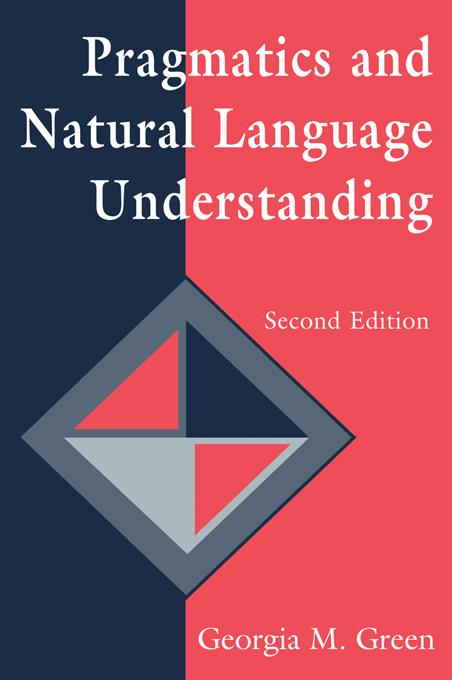
This book differs from other introductions to pragmatics in approaching the problems of interpreting language use in terms of interpersonal modelling of beliefs and intentions. It is intended to make issues involved in language understanding, such as speech, text, and discourse, accessible to the widest group possible -- not just specialists in linguistics or communication theorists -- but all scholars and researchers whose enterprises depend on having a useful model of how communicative agents understand utterances and expect their own utterances to be understood.
Based on feedback from readers over the past seven years, explanations in every chapter have been improved and updated in this thoroughly revised version of the original text published in 1989. The most extensive revisions concern the relevance of technical notions of mutual and normal belief, and the futility of using the notion 'null context' to describe meaning. In addition, the discussion of implicature now includes an extended explication of "Grice's Cooperative Principle" which attempts to put it in the context of his theory of meaning and rationality, and to preclude misinterpretations which it has suffered over the past 20 years. The revised chapter exploits the notion of normal belief to improve the account of conversational implicature.
Payez facilement par carte, Klarna, Apple Pay ou Google Pay. Pas satisfait ? Vous avez toujours une garantie de remboursement de 14 jours. En savoir plus dans nos conditions. Si vous avez des questions, envoyez-nous un e-mail à hello@memmo.org.
Memmo facilite tes études, où que tu sois dans le monde. On rassemble tes manuels de cours et des outils d'étude intelligents au même endroit : résumés, quiz, podcasts et flashcards. Et il y a Ted, ton compagnon d'étude qui répond à toutes tes questions. Plus de 50 000 étudiants étudient déjà ici – conçu pour t'aider à apprendre plus vite et à moins stresser.