
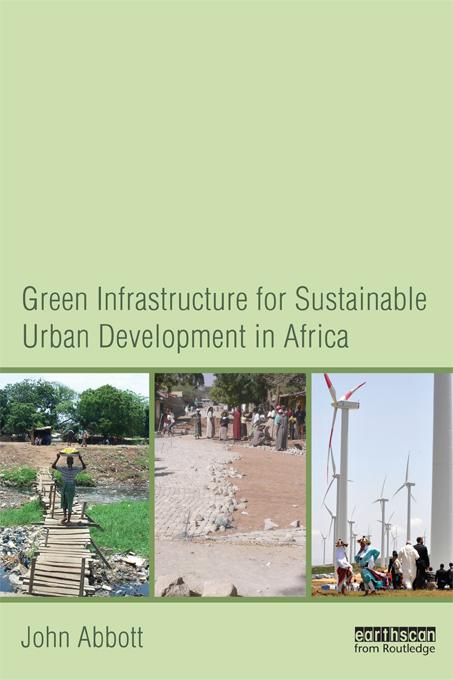
This book shows for the first time how green infrastructure can work in an African urban context. On one level it provides a major rethinking of the role of infrastructure in urban society since the creation of networked infrastructure in the early twentieth century. On another, it explores the changing paradigms of urban development through the fundamental question of how decisions are made.
With a focus on Africa's fast-growing secondary towns, where 70 per cent of the urban population live, the book explains how urban infrastructure provides the key to the relationship between economic development and social equity, through the mediation of natural resources. Adopting this view enables investment to be channelled more effectively to provide the engine for economic growth, while providing equitable services for all residents. At the same time, the mediation of resource flows integrates the metabolism of the city into the wider ecosystem. This vision leads to a new way of thinking about infrastructure, giving clear definition to the concept of green infrastructure.
On the basis of research gathered throughout an extensive career, John Abbott draws in particular from his experience in Ethiopia to demonstrate the ways in which infrastructure needs to respond to the economies, societies and natural environments of twenty-first century urban Africa.
Payez facilement par carte, Klarna, Apple Pay ou Google Pay. Pas satisfait ? Vous avez toujours une garantie de remboursement de 14 jours. En savoir plus dans nos conditions. Si vous avez des questions, envoyez-nous un e-mail à hello@memmo.org.
Memmo facilite tes études, où que tu sois dans le monde. On rassemble tes manuels de cours et des outils d'étude intelligents au même endroit : résumés, quiz, podcasts et flashcards. Et il y a Ted, ton compagnon d'étude qui répond à toutes tes questions. Plus de 50 000 étudiants étudient déjà ici – conçu pour t'aider à apprendre plus vite et à moins stresser.