
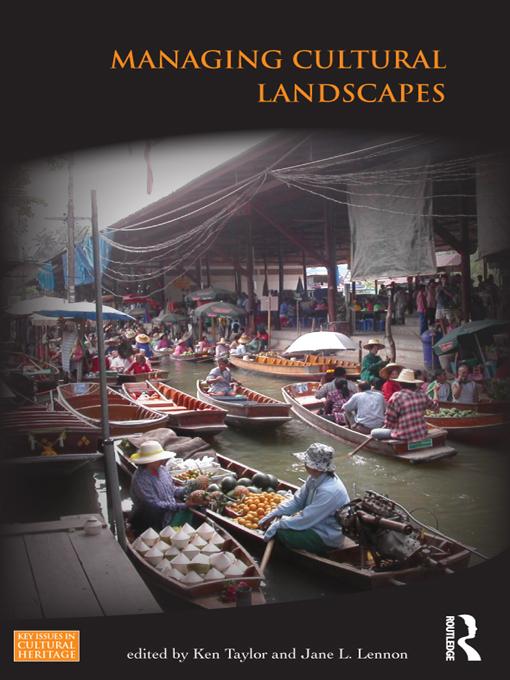
One of our deepest needs is for a sense of identity and belonging. A common feature in this is human attachment to landscape and how we find identity in landscape and place. The late 1980s and early 1990s saw a remarkable flowering of interest in, and understanding of, cultural landscapes. With these came a challenge to the 1960s and 1970s concept of heritage concentrating on great monuments and archaeological locations, famous architectural ensembles, or historic sites with connections to the rich and famous. Managing Cultural Landscapes explores the latest thought in landscape and place by:
airing critical discussion of key issues in cultural landscapes through accessible accounts of how the concept of cultural landscape applies in diverse contexts across the globe and is inextricably tied to notions of living history where landscape itself is a rich social history record
- widening the notion that landscape only involves rural settings to embrace historic urban landscapes/townscapes
- examining critical issues of identity, maintenance of traditional skills and knowledge bases in the face of globalization, and new technologies
- fostering international debate with interdisciplinary appeal to provide a critical text for academics, students, practitioners, and informed community organizations
- discussing how the cultural landscape concept can be a useful management tool relative to current issues and challenges.
With contributions from an international group of authors, Managing Cultural Landscapes provides an examination of the management of heritage values of cultural landscapes from Australia, Japan, China, USA, Canada, Thailand, Indonesia, Pacific Islands, India and the Philippines; it reviews critically the factors behind the removal of Dresden and its cultural landscape from World Heritage listing and gives an overview of Historic Urban Landscape thinking.
Payez facilement par carte, Klarna, Apple Pay ou Google Pay. Pas satisfait ? Vous avez toujours une garantie de remboursement de 14 jours. En savoir plus dans nos conditions. Si vous avez des questions, envoyez-nous un e-mail à hello@memmo.org.
Memmo facilite tes études, où que tu sois dans le monde. On rassemble tes manuels de cours et des outils d'étude intelligents au même endroit : résumés, quiz, podcasts et flashcards. Et il y a Ted, ton compagnon d'étude qui répond à toutes tes questions. Plus de 50 000 étudiants étudient déjà ici – conçu pour t'aider à apprendre plus vite et à moins stresser.