
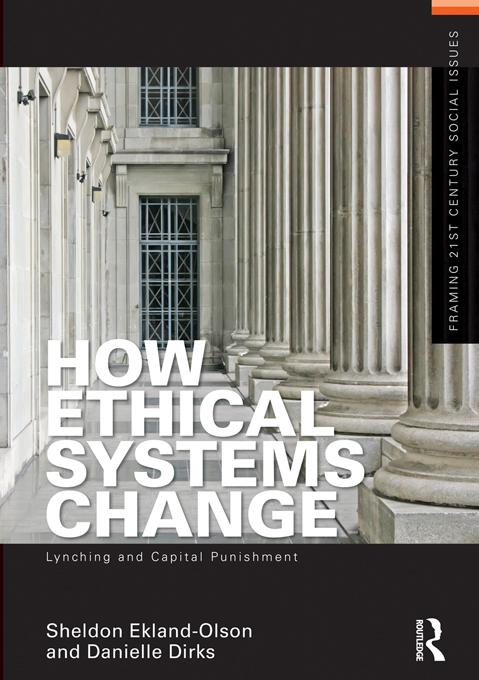
Slavery, lynching and capital punishment were interwoven in the United States and by the mid-twentieth century these connections gave rise to a small but well-focused reform movement. Biased and perfunctory procedures were replaced by prolonged trials and appeals, which some found messy and meaningless; DNA profiling clearly established innocent persons had been sentenced to death. The debate over taking life to protect life continues; this book is based on a hugely popular undergraduate course taught at the University of Texas, and is ideal for those interested in criminal justice, social problems, social inequality, and social movements.
This book is an excerpt from a larger text, Who Lives, Who Dies, Who Decides?, http://www.routledge.com/9780415892476/
Payez facilement par carte, Klarna, Apple Pay ou Google Pay. Pas satisfait ? Vous avez toujours une garantie de remboursement de 14 jours. En savoir plus dans nos conditions. Si vous avez des questions, envoyez-nous un e-mail à hello@memmo.org.
Memmo facilite tes études, où que tu sois dans le monde. On rassemble tes manuels de cours et des outils d'étude intelligents au même endroit : résumés, quiz, podcasts et flashcards. Et il y a Ted, ton compagnon d'étude qui répond à toutes tes questions. Plus de 50 000 étudiants étudient déjà ici – conçu pour t'aider à apprendre plus vite et à moins stresser.