
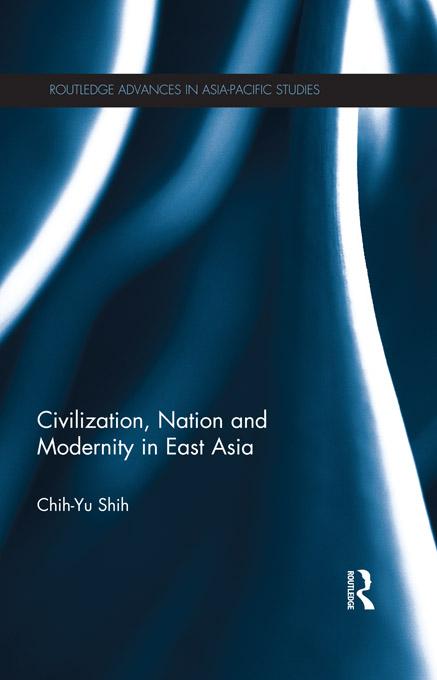
This book explores the crisis of cultural identity which has assaulted Asian countries since Western countries began to have a profound impact on Asia in the nineteenth century. Confronted by Western 'civilization' and by 'modernity', Asian countries have been compelled to rethink their identity, and to consider how they should relate to Western 'civilization' and 'modernity'. The result, the author argues, has been a redefining by Asian countries of their own character as nations, and an adaptation of 'civilization' and 'modernity' to their own special conditions. Asian nations, the author contends, have thereby engaged with the West and with modernity, but on their own terms, occasionally, and in various inconsistent ways in which they could assert a sense of difference, forcing changes in the Western concept of civilization. Drawing on postmodern theory, the Kyoto School, Confucian and other traditional Asian thought, and the actual experiences of Asian countries, especially China and Japan, the author demonstrates that Asian countries’ redefining of the concept of civilization in the course of their quest for an appropriate postmodern national identity is every bit as key a part of 'the rise of Asia' as economic growth or greater international political activity.
Payez facilement par carte, Klarna, Apple Pay ou Google Pay. Pas satisfait ? Vous avez toujours une garantie de remboursement de 14 jours. En savoir plus dans nos conditions. Si vous avez des questions, envoyez-nous un e-mail à hello@memmo.org.
Memmo facilite tes études, où que tu sois dans le monde. On rassemble tes manuels de cours et des outils d'étude intelligents au même endroit : résumés, quiz, podcasts et flashcards. Et il y a Ted, ton compagnon d'étude qui répond à toutes tes questions. Plus de 50 000 étudiants étudient déjà ici – conçu pour t'aider à apprendre plus vite et à moins stresser.