
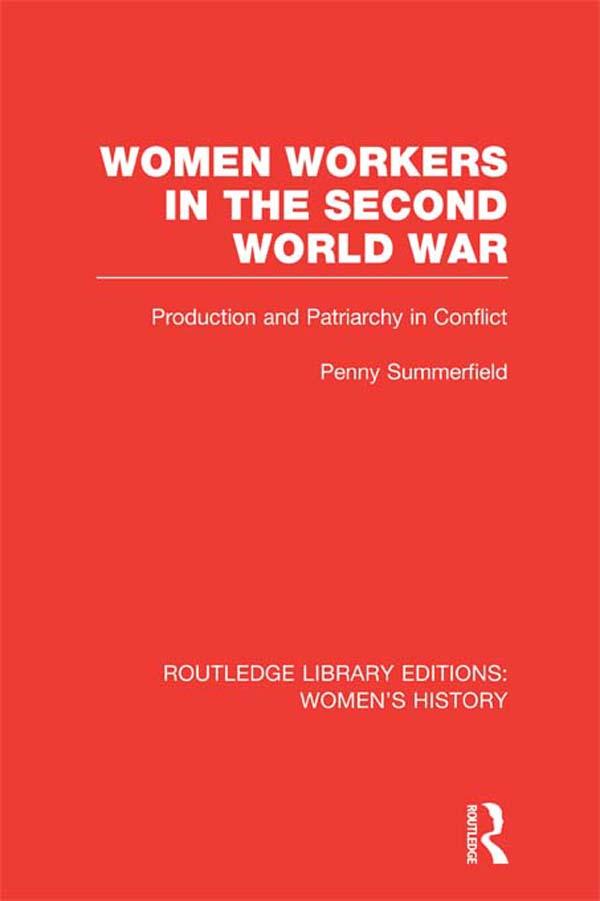
The Second World War is often seen as a period of emancipation, because of the influx of women into paid work, and because the state took steps to relieve women of domestic work.
This study challenges such a picture. The state approached the removal of women from the domestic sphere with extreme caution, in spite of the desperate need for women’s labour in war work. Women’s own preferences were frequently neglected or distorted in the search for a compromise between production and patriarchy. However, the enduring practices of paying women less and treating them as an inferior category of workers led to growth in the numbers and proportions of women employed after the war in many areas of work.
Penny Summerfield concludes that the war accelerated the segregation of women in 'inferior' sectors of work, and inflated the expectation that working women would bear the double burden without a redistribution of responsibility for the domestic sphere between men, women and the state.
First published in 1984, this is an important book for students of history, sociology and women’s studies at all levels.
Payez facilement par carte, Klarna, Apple Pay ou Google Pay. Pas satisfait ? Vous avez toujours une garantie de remboursement de 14 jours. En savoir plus dans nos conditions. Si vous avez des questions, envoyez-nous un e-mail à hello@memmo.org.
Memmo facilite tes études, où que tu sois dans le monde. On rassemble tes manuels de cours et des outils d'étude intelligents au même endroit : résumés, quiz, podcasts et flashcards. Et il y a Ted, ton compagnon d'étude qui répond à toutes tes questions. Plus de 50 000 étudiants étudient déjà ici – conçu pour t'aider à apprendre plus vite et à moins stresser.