
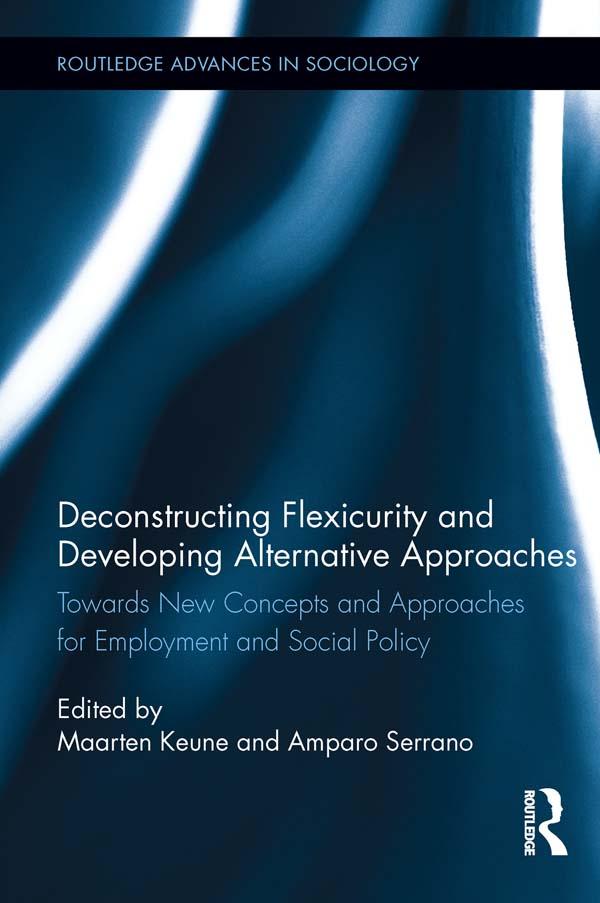
In recent years, the concept of flexicurity has come to occupy a central place in political and academic debates regarding employment and social policy. It fosters a view in which the need for continuously increasing flexibility is the basic assumption, and the understanding of security increasingly moves from social protection to self-insurance or individual adaptability. Moreover, it rejects the traditional contradictions between flexibility and security, blending the two into a single notion and thus depoliticizing the relationships between capital and labour. This volume provides a critical discussion of the flexicurity concept, the theories upon which it is built and the ideas that it transmits about work, unemployment and social justice. It shows that flexicurity fosters the further individualization of social protection, an increase in precariousness and the further weakening of labour in relation to capital. The authors present a series of alternative theoretical, normative and policy approaches that provide due attention to the collective and political dimension of vulnerability and allow for the development of new societal projects based on alternative values and assumptions.
Payez facilement par carte, Klarna, Apple Pay ou Google Pay. Pas satisfait ? Vous avez toujours une garantie de remboursement de 14 jours. En savoir plus dans nos conditions. Si vous avez des questions, envoyez-nous un e-mail à hello@memmo.org.
Memmo facilite tes études, où que tu sois dans le monde. On rassemble tes manuels de cours et des outils d'étude intelligents au même endroit : résumés, quiz, podcasts et flashcards. Et il y a Ted, ton compagnon d'étude qui répond à toutes tes questions. Plus de 50 000 étudiants étudient déjà ici – conçu pour t'aider à apprendre plus vite et à moins stresser.