
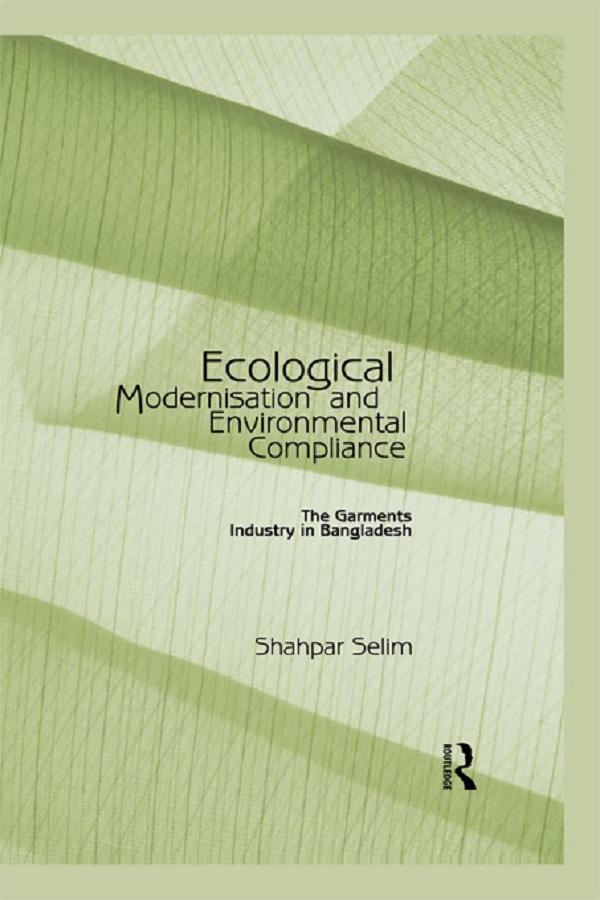
Economic development that is environmentally, socially and ethically sound is at the forefront of contemporary debates all over the world. This is especially relevant to international trade where goods manufactured in least developed countries (LDCs) are being exported to developed countries (DCs) via international supply chains.
This book looks at Bangladesh’s ready-made garments (RMG) industry – the seventh largest in the world — facing demands for environmental and social management according to standards set by consumers in environmentally progressive societies. Apart from these concerns not having found cultural or institutional resonance in Bangladesh, the pressures for cost reduction, on-time delivery and cheap labour in a highly competitive international market make the problem that much more complex.
In this book Selim uses the analytical framework provided by the ecological modernisation theory to examine the economic, communicative and social political aspects of ethical trade, and argues that the economy-ecology relationship can indeed be a positive sum game if nation-states and economic actors change their policymaking styles and greening behaviour to take advantage of scientific evidence and green technological opportunities.
Payez facilement par carte, Klarna, Apple Pay ou Google Pay. Pas satisfait ? Vous avez toujours une garantie de remboursement de 14 jours. En savoir plus dans nos conditions. Si vous avez des questions, envoyez-nous un e-mail à hello@memmo.org.
Memmo facilite tes études, où que tu sois dans le monde. On rassemble tes manuels de cours et des outils d'étude intelligents au même endroit : résumés, quiz, podcasts et flashcards. Et il y a Ted, ton compagnon d'étude qui répond à toutes tes questions. Plus de 50 000 étudiants étudient déjà ici – conçu pour t'aider à apprendre plus vite et à moins stresser.