
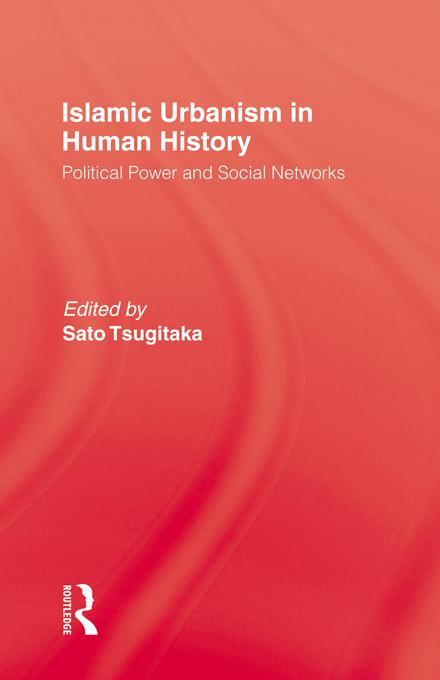
Islamic cultures in the Middle East have inherited and developed a legacy of urbanism spanning millennia to the ancient civilizations of the region. In contrast to well-organized states like China in history, Muslim peoples formed loose states based on intricate social networks. As a consequence, most studies of urban history in the Middle East have focused their gaze exclusively on urban social organization, often neglecting the extension of political power to rural areas. Covering Morocco, Egypt, Syria, Iran and Brunei, this volume explores the relationship between political power and social networks in medieval and modern Middle Eastern history. The authors examine social, religious and administrative networks that governed rural and urban areas and led to state formation, providing a more inclusive view of the mechanisms of power and control in the Islamic world.
Payez facilement par carte, Klarna, Apple Pay ou Google Pay. Pas satisfait ? Vous avez toujours une garantie de remboursement de 14 jours. En savoir plus dans nos conditions. Si vous avez des questions, envoyez-nous un e-mail à hello@memmo.org.
Memmo facilite tes études, où que tu sois dans le monde. On rassemble tes manuels de cours et des outils d'étude intelligents au même endroit : résumés, quiz, podcasts et flashcards. Et il y a Ted, ton compagnon d'étude qui répond à toutes tes questions. Plus de 50 000 étudiants étudient déjà ici – conçu pour t'aider à apprendre plus vite et à moins stresser.