
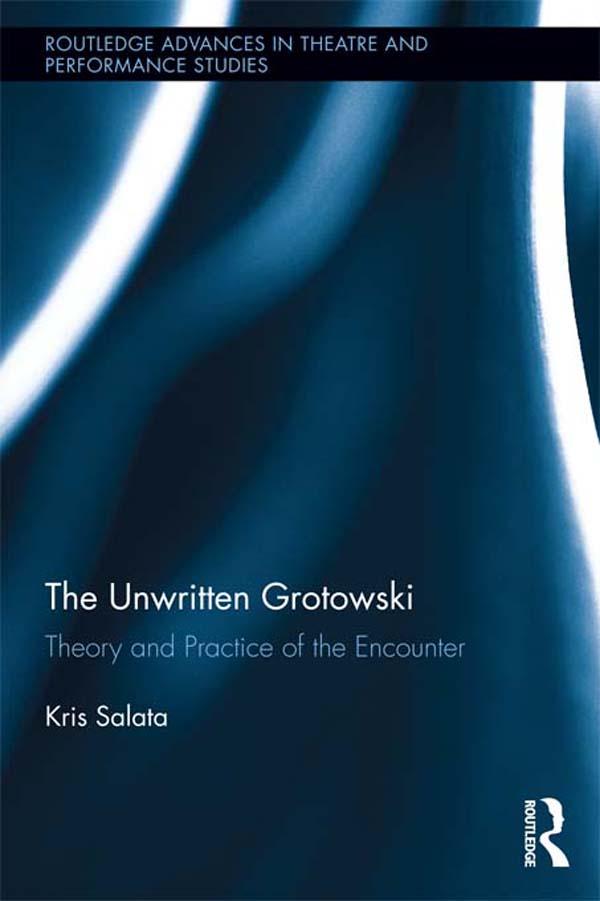
This book gives a new view on the legacy of Jerzy Grotowski (1933-1999), one of the central, and yet misunderstood, figures who shaped 20th-century theatre, focusing on his least known last phase of work on ancient songs and the craft of the performer. Salata posits Grotowski’s work as philosophical practice, and more particularly, as practical research in the phenomenology of being, arguing that Grotowski’s departure from theatrical productions (and thus critical consideration) resulted from his uncompromising pursuit of one central problem, "What does it mean to reveal oneself?" — the very question that drove his stage directing work. The book demonstrates that the answer led him through the path of gradually stripping the theatrical phenomenon down to its most elemental aspect, which shows itself through the craft of the performer as a non-representational event. This particular quality released at the heights of the art of the performer is referred to as aliveness, or true liveness in this study in order to shift scholarly focus onto something that has always fascinated great theatre practitioners, including Stanislavski and Grotowski, and of which academic scholarship has limited grasp. Salata’s theoretical analysis of aliveness reaches out to phenomenology and a broad range of post-structural philosophy and critical theory, through which Grotowski’s project is portrayed as philosophical practice.
Payez facilement par carte, Klarna, Apple Pay ou Google Pay. Pas satisfait ? Vous avez toujours une garantie de remboursement de 14 jours. En savoir plus dans nos conditions. Si vous avez des questions, envoyez-nous un e-mail à hello@memmo.org.
Memmo facilite tes études, où que tu sois dans le monde. On rassemble tes manuels de cours et des outils d'étude intelligents au même endroit : résumés, quiz, podcasts et flashcards. Et il y a Ted, ton compagnon d'étude qui répond à toutes tes questions. Plus de 50 000 étudiants étudient déjà ici – conçu pour t'aider à apprendre plus vite et à moins stresser.