
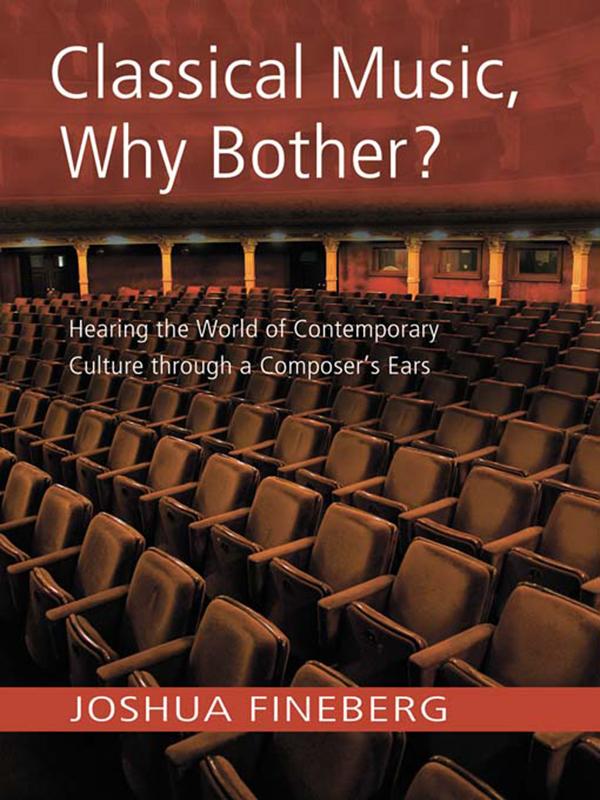
The famous quip I don't know much about art, but I know what I like sums up many people's ideas about how to judge a work of art; but there are inherent limitations if we rely on immediate impressions in judging what should be enduring products of our culture. While some might criticize this as a return to elitism, Joshua Fineberg argues that without some way of determining intrinsic value, there can be no movement forward for creators or their audience. He draws on contemporary thought about Design space and Universal Grammar to show how intrinsic values can be rediscovered. He then looks at the importance of multimedia in allowing multiple points of entry for the discovering of new works, finally showing how the composer can Design music for human beings--creating a kind of art that can preserve the research agenda of conceptual work without renouncing the understanding of human listeners and performers embodied by craft. Classical Music: Why Bother? will intrigue all listeners of contemporary music, students of musical thought, and composers-but it will also interest students of contemporary aesthetics. It answers the age-old question How can we bring a new audience to contemporary art? - and challenges both the creators and their audience to broaden their ideas about what is valuable and lasting in today's culture.
Payez facilement par carte, Klarna, Apple Pay ou Google Pay. Pas satisfait ? Vous avez toujours une garantie de remboursement de 14 jours. En savoir plus dans nos conditions. Si vous avez des questions, envoyez-nous un e-mail à hello@memmo.org.
Memmo facilite tes études, où que tu sois dans le monde. On rassemble tes manuels de cours et des outils d'étude intelligents au même endroit : résumés, quiz, podcasts et flashcards. Et il y a Ted, ton compagnon d'étude qui répond à toutes tes questions. Plus de 50 000 étudiants étudient déjà ici – conçu pour t'aider à apprendre plus vite et à moins stresser.
Tu pourrais aussi aimer
Acheter le livre0