
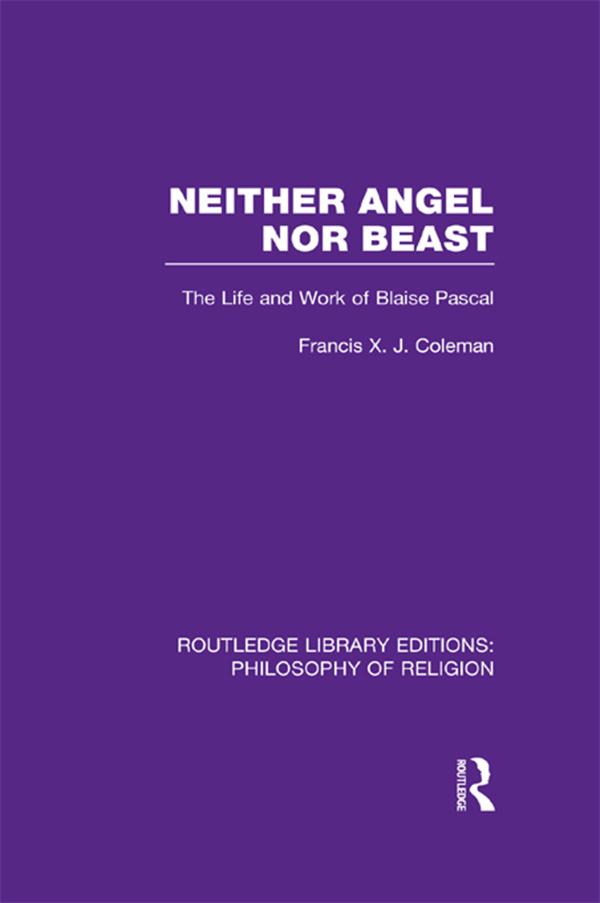
Blaise Pascal began as a mathematical prodigy, developed into a physicist and inventor, and had become by the end of his life in 1662 a profound religious thinker. As a philosopher, he was most convinced by the long tradition of scepticism, and so refused – like Kierkegaard – to build a philosophical or theological system. Instead, he argued that the human heart required other forms of discourse to come to terms with the basic existential questions – our nature, purpose and relationship with God.
This introduction to the life and philosophical thought of Pascal is intended for the general reader. Strikingly illustrated, it traces the antithetical tensions in Pascal’s life from his infancy, when he was said to have been placed under the spell of a sorceress, to his final years of extreme asceticism. Pascal stressed both the misery and greatness of humanity, our finitude and our comprehension of the infinite. The book shows how his life, philosophical thought and literary style can best be understood in the light of the paradoxical view of human nature. It covers the methods of argument and the central issues of the Provincial Letters and of the Pensées; the Introduction places Pascal’s thought in the religious and political climate of seventeenth-century France, and a ‘Chronology of the Life of Pascal’ is also included.
Payez facilement par carte, Klarna, Apple Pay ou Google Pay. Pas satisfait ? Vous avez toujours une garantie de remboursement de 14 jours. En savoir plus dans nos conditions. Si vous avez des questions, envoyez-nous un e-mail à hello@memmo.org.
Memmo facilite tes études, où que tu sois dans le monde. On rassemble tes manuels de cours et des outils d'étude intelligents au même endroit : résumés, quiz, podcasts et flashcards. Et il y a Ted, ton compagnon d'étude qui répond à toutes tes questions. Plus de 50 000 étudiants étudient déjà ici – conçu pour t'aider à apprendre plus vite et à moins stresser.