
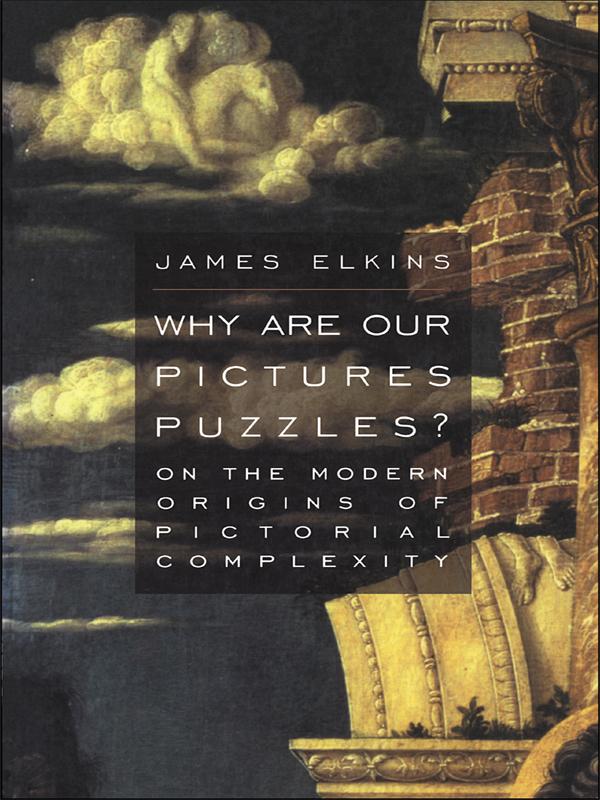
With bracing clarity, James Elkins explores why images are taken to be more intricate and hard to describe in the twentieth century than they had been in any previous century. Why Are Our Pictures Puzzles? uses three models to understand the kinds of complex meaning that pictures are thought to possess: the affinity between the meanings of paintings and jigsaw-puzzles; the contemporary interest in ambiguity and 'levels of meaning'; and the penchant many have to interpret pictures by finding images hidden within them. Elkins explores a wide variety of examples, from the figures hidden in Renaissance paintings to Salvador Dali's paranoiac meditations on Millet's Angelus, from Persian miniature paintings to jigsaw-puzzles. He also examines some of the most vexed works in history, including Watteau's "meaningless" paintings, Michelangelo's Sistine Ceiling, and Leonardo's Last Supper.
Payez facilement par carte, Klarna, Apple Pay ou Google Pay. Pas satisfait ? Vous avez toujours une garantie de remboursement de 14 jours. En savoir plus dans nos conditions. Si vous avez des questions, envoyez-nous un e-mail à hello@memmo.org.
Memmo facilite tes études, où que tu sois dans le monde. On rassemble tes manuels de cours et des outils d'étude intelligents au même endroit : résumés, quiz, podcasts et flashcards. Et il y a Ted, ton compagnon d'étude qui répond à toutes tes questions. Plus de 50 000 étudiants étudient déjà ici – conçu pour t'aider à apprendre plus vite et à moins stresser.