
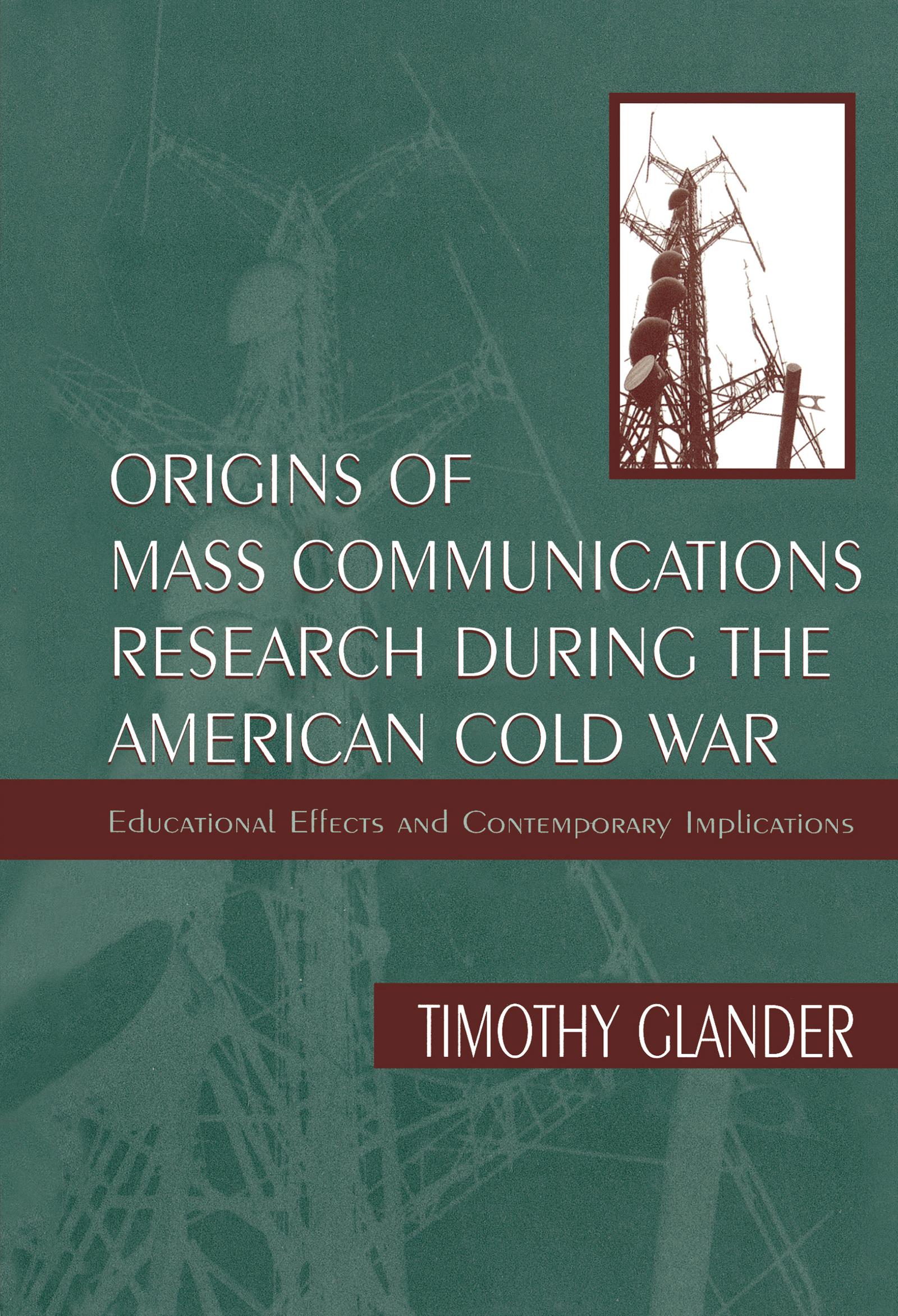
In this critical examination of the beginnings of mass communications research in the United States, written from the perspective of an educational historian, Timothy Glander uses archival materials that have not been widely studied to document, contextualize, and interpret the dominant expressions of this field during the time in which it became rooted in American academic life, and tries to give articulation to the larger historical forces that gave the field its fundamental purposes. By mid-century, mass communications researchers had become recognized as experts in describing the effects of the mass media on learning and other social behavior. However, the conditions that promoted and sustained their authority as experts have not been adequately explored. This study analyzes the ideological and historical forces giving rise to, and shaping, their research.
Until this study, the history of communications research has been written almost entirely from within the field of communications studies and, as a result, has tended to refrain from asking troubling foundational questions about the origins of the field or to entertain how its emergence shaped educational discourse during the post-World War II period. By examining the intersection between the individual biographies of key leaders in the communications field (Wilbur Schramm, Paul Lazarsfeld, Bernard Berelson, Hadley Cantril, Stuart Dodd, and others) and the larger historical context in which they lived and worked, this book aims to tell part of the story of how the field of communications became divorced from the field of education. The book also examines the work of significant voices on the rise of mass communications study (including C. Wright Mills, William W. Biddle, Paul Goodman, and others) who theorized about the emergence of a mass society. It concludes with a discussion of the contemporary relevance of the theory of a mass society to educational thought and practice.
Payez facilement par carte, Klarna, Apple Pay ou Google Pay. Pas satisfait ? Vous avez toujours une garantie de remboursement de 14 jours. En savoir plus dans nos conditions. Si vous avez des questions, envoyez-nous un e-mail à hello@memmo.org.
Memmo facilite tes études, où que tu sois dans le monde. On rassemble tes manuels de cours et des outils d'étude intelligents au même endroit : résumés, quiz, podcasts et flashcards. Et il y a Ted, ton compagnon d'étude qui répond à toutes tes questions. Plus de 50 000 étudiants étudient déjà ici – conçu pour t'aider à apprendre plus vite et à moins stresser.