
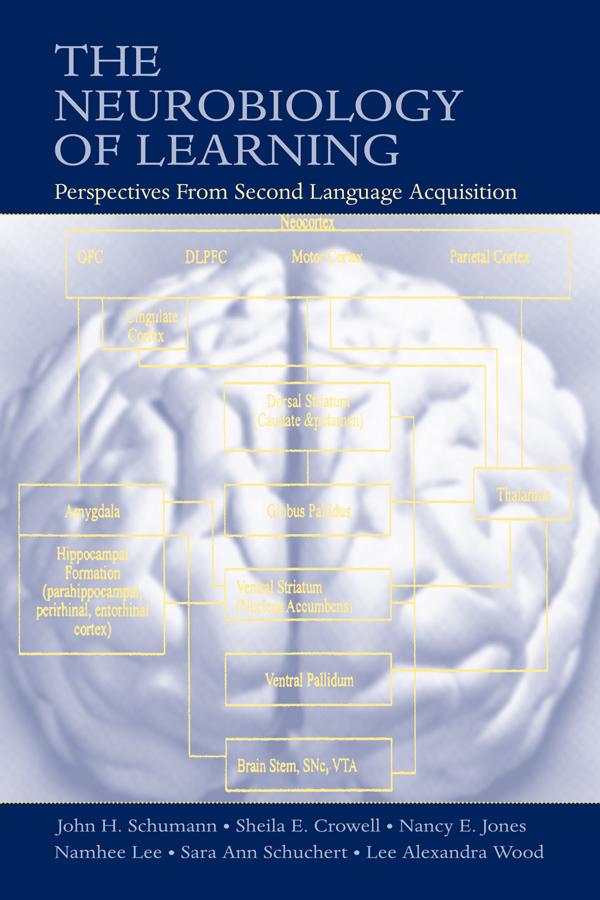
This book constitutes a timely contribution to the existing literature by presenting a relatively comprehensive, neurobiological account of certain aspects of second language acquisition. It represents the collaborative efforts of members of the Neurobiology of Language Research Group in the Applied Linguistics and TESL Department at UCLA. Members of the group are trained in neurobiology and then use this knowledge to develop biological accounts of various aspects of applied linguistics.
The volume avoids the corticocentric bias that characterizes many brain-language publications--both cortical and subcortical structures receive their appropriate attention. In addition, it demonstrates that enough is presently known about the brain to inform our conceptualizations of how humans acquire second languages, thus, it provides a refreshingly novel, highly integrative contribution to the (second) language acquisition literature.
The goal of the research program was based on the need to draw more links between the neurobiological mechanisms and second language acquisition. As such, the book promotes a neurobiology of language that starts with the brain and moves to behavior. The fundamental insights presented should guide second language acquisition researchers for years to come.
Payez facilement par carte, Klarna, Apple Pay ou Google Pay. Pas satisfait ? Vous avez toujours une garantie de remboursement de 14 jours. En savoir plus dans nos conditions. Si vous avez des questions, envoyez-nous un e-mail à hello@memmo.org.
Memmo facilite tes études, où que tu sois dans le monde. On rassemble tes manuels de cours et des outils d'étude intelligents au même endroit : résumés, quiz, podcasts et flashcards. Et il y a Ted, ton compagnon d'étude qui répond à toutes tes questions. Plus de 50 000 étudiants étudient déjà ici – conçu pour t'aider à apprendre plus vite et à moins stresser.