
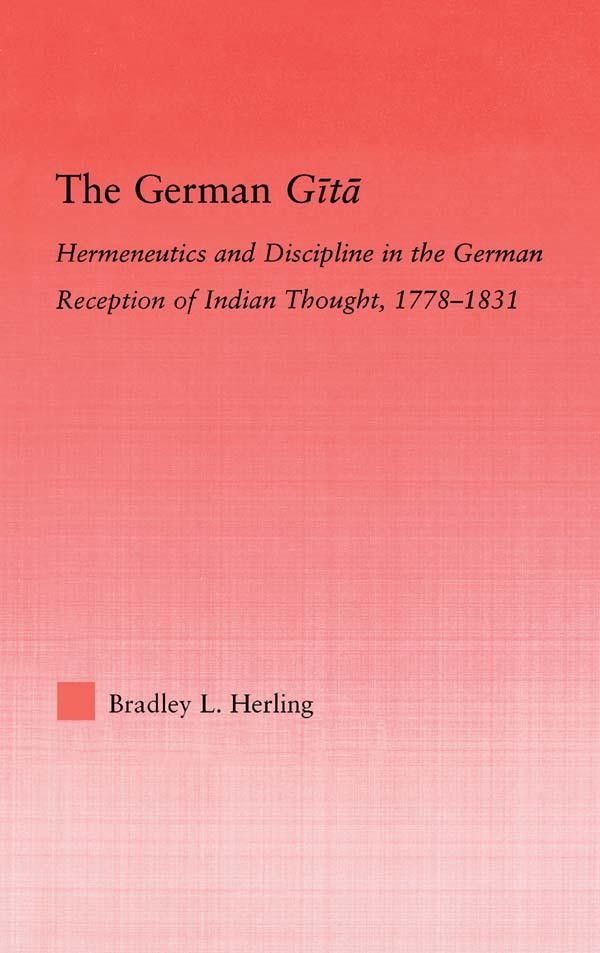
How did the Bhagavadgãtà first become an object of German philosophical and philological inquiry? How were its foundational concepts initially interpreted within German intellectual circles, and what does this episode in the history of cross-cultural encounter teach us about the status of comparative philosophy today? This book addresses these questions through a careful study of the figures who read, translated and interpreted the Bhagavadgãtà around the turn of the nineteenth century in Germany: J.G. Herder, F. Majer, F. Schlegel, A.W. Schlegel, W. von Humboldt, and G.W.F. Hegel. Methodologically, the study attends to the intellectual contexts and prejudices that framed the early reception of the text. But it also delves deeper by investigating the way these frameworks inflected the construction of the Bhagavadgãtà and its foundational concepts through the scholarly acts of excerpting, anthologization, and translation. Overall, the project contributes to the pluralization of Western philosophy and its history while simultaneously arguing for a continued critical alertness in cross-cultural comparison of philosophical and religious worldviews.
Payez facilement par carte, Klarna, Apple Pay ou Google Pay. Pas satisfait ? Vous avez toujours une garantie de remboursement de 14 jours. En savoir plus dans nos conditions. Si vous avez des questions, envoyez-nous un e-mail à hello@memmo.org.
Memmo facilite tes études, où que tu sois dans le monde. On rassemble tes manuels de cours et des outils d'étude intelligents au même endroit : résumés, quiz, podcasts et flashcards. Et il y a Ted, ton compagnon d'étude qui répond à toutes tes questions. Plus de 50 000 étudiants étudient déjà ici – conçu pour t'aider à apprendre plus vite et à moins stresser.