
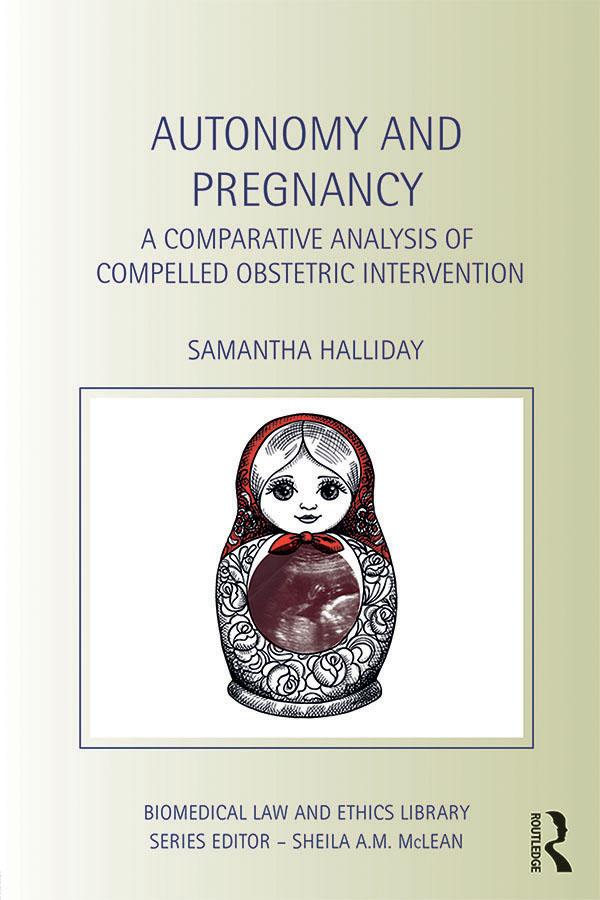
Technology has come to dominate the modern experience of pregnancy and childbirth, but instead of empowering pregnant women, technology has been used to identify the foetus as a second patient characterised as a distinct entity with its own needs and interests. Often, foetal and the woman’s interests will be aligned, though in legal and medical discourses the two ‘patients’ are frequently framed as antagonists with conflicting interests.
This book focuses upon the permissibility of encroachment on the pregnant woman’s autonomy in the interests of the foetus. Drawing on the law in England & Wales, the United States of America and Germany, Samantha Halliday focuses on the tension between a pregnant woman’s autonomy and medical actions taken to protect the foetus, addressing circumstances in which courts have declared medical treatment lawful in the face of the pregnant woman’s refusal of consent.
As a work which calls into question the understanding of autonomy in prenatal medical care, this book will be of great use and interest to students, researchers and practitioners in medical law, comparative law, bioethics, and human rights.
Payez facilement par carte, Klarna, Apple Pay ou Google Pay. Pas satisfait ? Vous avez toujours une garantie de remboursement de 14 jours. En savoir plus dans nos conditions. Si vous avez des questions, envoyez-nous un e-mail à hello@memmo.org.
Memmo facilite tes études, où que tu sois dans le monde. On rassemble tes manuels de cours et des outils d'étude intelligents au même endroit : résumés, quiz, podcasts et flashcards. Et il y a Ted, ton compagnon d'étude qui répond à toutes tes questions. Plus de 50 000 étudiants étudient déjà ici – conçu pour t'aider à apprendre plus vite et à moins stresser.