
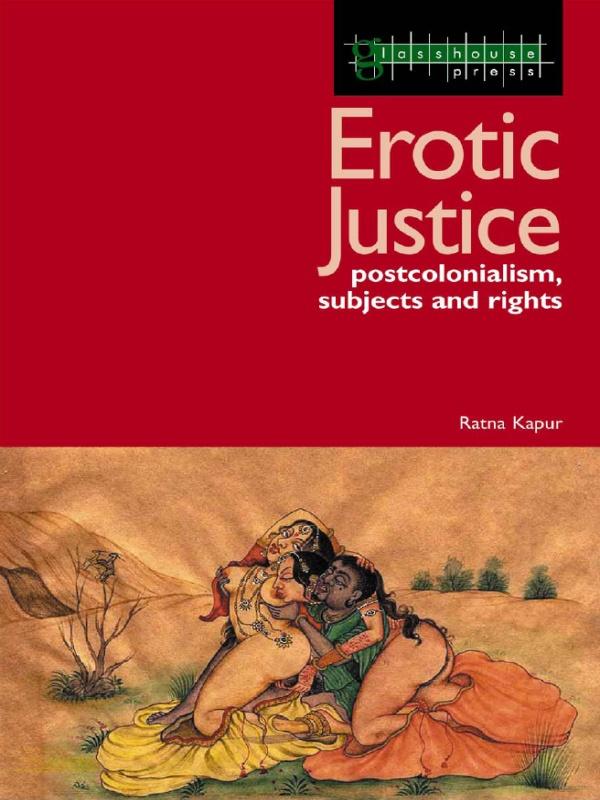
The essays in Erotic Justice address the ways in which law has been implicated in contemporary debates dealing with sexuality, culture and `different' subjects - including women, sexual minorities, Muslims and the transnational migrant. Law is analyzed as a discursive terrain, where these different subjects are excluded or included in the postcolonial present on terms that are reminiscent of the colonial encounter and its treatment of difference.
Bringing a postcolonial feminist legal analysis to her discussion, Kapur is relentless in her critiques on how colonial discourses, cultural essentialism, and victim rhetoric are reproduced in universal, liberal projects such as human rights and international law, as well as in the legal regulation of sexuality and culture in a postcolonial context. Drawing her examples from postcolonial India, Ratna Kapur demonstrates the theoretical and disruptive possibilities that the postcolonial subject brings to international law, human rights, and domestic law. In the process, challenges are offered to the political and theoretical constructions of the nation, sexuality, cultural authenticity, and women's subjectivity.
Payez facilement par carte, Klarna, Apple Pay ou Google Pay. Pas satisfait ? Vous avez toujours une garantie de remboursement de 14 jours. En savoir plus dans nos conditions. Si vous avez des questions, envoyez-nous un e-mail à hello@memmo.org.
Memmo facilite tes études, où que tu sois dans le monde. On rassemble tes manuels de cours et des outils d'étude intelligents au même endroit : résumés, quiz, podcasts et flashcards. Et il y a Ted, ton compagnon d'étude qui répond à toutes tes questions. Plus de 50 000 étudiants étudient déjà ici – conçu pour t'aider à apprendre plus vite et à moins stresser.